Those deep red or purple circles after a cupping session can look dramatic, especially if you are headed back to the office, the gym, or a summer weekend in West Philly. So, does cupping leave lasting marks? For most healthy people, no. Cupping marks are temporary changes in the skin and superficial tissue that fade on their own, often within several days to two weeks.
They are also not the same thing as a painful injury bruise. Cupping uses controlled suction to lift the skin and underlying fascia rather than pressing downward as traditional massage does. That lift can bring blood closer to the surface and create visible circular discoloration. The appearance may be bold, but it is usually a normal response to the treatment.
Why Cupping Marks Appear
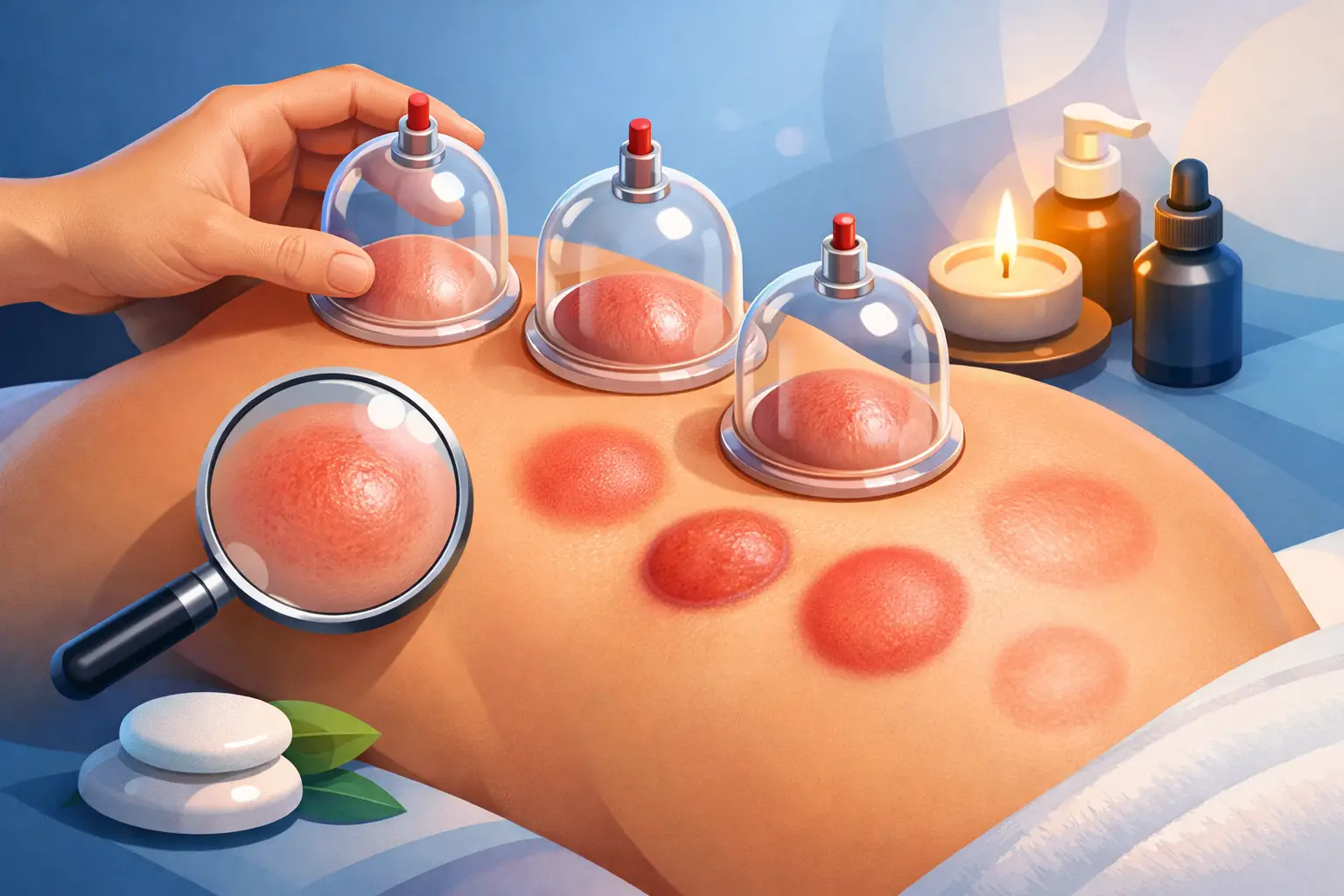
During a cupping massage, a therapist places cups on selected areas of the body and creates suction. Depending on the goal of the session, cups may stay in one place for a short time or glide over the skin with massage oil or lotion. The suction decompresses tissue, encourages circulation in the area, and can be especially useful around stubborn muscle tightness and movement restrictions.
The circles that remain afterward are often called cup marks. They can range from light pink to red, burgundy, or dark purple. They may feel mildly tender or warm, much like the feeling after a focused deep tissue session. Some clients barely notice them beyond the color; others feel sensitivity for a day or two.
Color alone does not tell a complete story about your health, “toxins,” or how severe your muscle tension is. A darker mark can happen because of cup pressure, how long the cup stayed in place, your skin tone, your circulation, hydration, medications, and how easily your body tends to discolor after pressure. It is not a scorecard for whether the session “worked.”
Does Cupping Leave Lasting Marks for Everyone?
In typical therapeutic cupping, lasting marks are uncommon. Most fade gradually over three to 14 days. Light marks may disappear within hours or a few days, while darker marks can take longer. If you have a big event, beach plans, professional photos, or simply do not want visible circles, say so before your session. Your therapist can often adjust the pressure, shorten stationary cup time, use more gliding work, or select areas that are easier to cover.
How long marks remain depends on the person and the session. People who bruise easily, have more sensitive skin, take certain medications, or receive stronger stationary cupping may see marks that linger closer to two weeks. Repeated treatment in the same area before the skin has fully recovered can also extend the timeline.
A qualified massage therapist should never treat dark marks as a required outcome. Effective bodywork is not about enduring the most intense sensation or collecting the darkest circles. It is about choosing an appropriate level of pressure and technique for your goals, comfort, health history, and recovery capacity.
Cupping Marks Versus Bruising
Cupping marks and bruises can look alike, which is why the distinction gets confusing. A standard bruise usually develops after trauma damages small blood vessels under the skin. Cupping can also affect tiny vessels near the surface, but it does so through measured suction instead of an accidental impact.
That said, your body does not need a technical definition to tell you when something feels wrong. Significant pain, swelling, blistering, numbness, broken skin, or a mark that continues getting worse is not a routine post-session experience. Contact your health care provider promptly if those symptoms occur. If you believe a treatment caused an injury, let the therapist know as well.
What Helps Cupping Marks Fade Comfortably
There is no need to aggressively “treat” normal cup marks. Your skin generally needs time, hydration, and a little kindness. Drink water as part of your normal recovery routine, eat regular nourishing meals, and prioritize sleep when possible. Gentle movement can feel great after bodywork, but skip an intense workout if the area feels sore or overly sensitive.
For the first day or so, avoid very hot showers, saunas, hot tubs, and harsh exfoliation directly over marked areas. Do not scrub, pick at, or try to massage the marks away. A lukewarm shower and loose, comfortable clothing are usually a better choice.
Sun exposure can make discoloration more noticeable and may contribute to lingering uneven pigment for some skin types. If the area will be exposed, cover it or use sun protection. This is a small step that matters, particularly during Philadelphia’s sunny months when shoulders, backs, and legs are more likely to be uncovered.
If you have an important occasion, plan your cupping session with a buffer. Book at least two weeks ahead if you want the best chance of having no visible marks by the date. Your therapist can also build a session around Swedish massage, myofascial release, trigger point therapy, Thai-inspired stretching, or other techniques that support your goals without leaving circular discoloration.
When Cupping May Not Be the Right Choice
Cupping is not a one-size-fits-all service, even when you love deep therapeutic work. A responsible intake conversation matters. Tell your therapist about blood-thinning medications, bleeding disorders, diabetes-related skin concerns, pregnancy, active cancer treatment, recent surgery, current infections, rashes, sunburn, varicose veins, open wounds, or a history of easy bruising.
Cupping should not be applied over broken or irritated skin, an active infection, or areas with acute inflammation. It may also need to be avoided or modified around certain medical conditions. When in doubt, get clearance from your physician or medical specialist before scheduling. Massage therapy can complement health care, but it does not replace medical evaluation for unexplained pain, swelling, weakness, or skin changes.
The same goes for persistent marks. If a mark has not improved after two weeks, appears without any clear reason, or comes with unusual symptoms, check in with a health professional. Your peace of mind is worth more than pushing through a wellness trend.
Make Your First Cupping Session Personal
A good cupping session starts before the cups ever touch your skin. Share what brought you in: tight traps after long laptop days, stubborn back tension after lifting, limited shoulder mobility, stress that seems to live in your jaw, or tired legs after training. Also share your comfort level with visible marks.
At Life4orceTouch, the goal is individualized bodywork, not a standardized treatment that looks the same on every client. Cupping can be one useful tool alongside therapeutic massage, deep tissue techniques, myofascial release, and focused work for areas that need more attention. Sometimes it is exactly the right addition. Other times, a different approach better fits your body and your schedule.
Ask questions before and during the service. You deserve to know where cups are being placed, what level of sensation is expected, and whether marks are likely. Speak up if suction feels sharp, pinchy, or too intense. Therapeutic does not have to mean miserable!
Visible circles may start conversations, but they should never be a surprise. With thoughtful technique and clear communication, cupping can be a supportive part of a recovery or self-care routine – and the marks, if they appear, are usually just a temporary reminder that you made time for your body.