
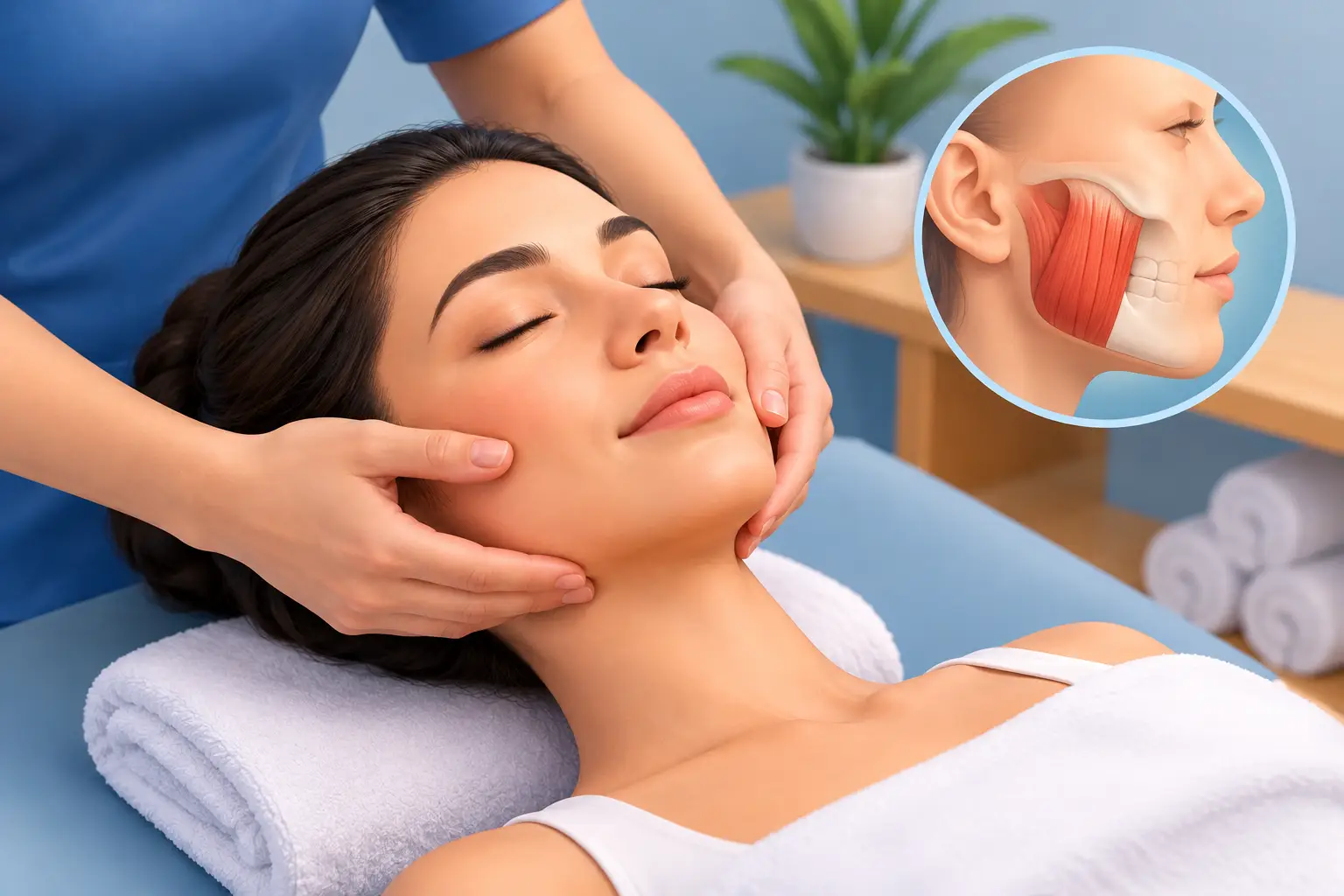
Your jaw should not feel like it has been working a double shift by breakfast. Yet many people wake with sore cheeks, headaches near the temples, tooth sensitivity, or a tired, tight feeling around the jawline. Can massage help jaw clenching? For many people, yes – thoughtful massage and bodywork can help calm overworked muscles, reduce the stress-driven tension feeding the habit, and make the whole head, neck, and shoulder area feel more comfortable.
That does not mean massage is a one-appointment cure for every case. Jaw clenching can involve stress, sleep habits, bite issues, medication effects, pain patterns, and temporomandibular joint concerns. The most helpful approach is individualized: reduce the muscular load, notice what triggers the clenching, and bring in a dentist or medical provider when symptoms call for it.
Why Jaw Clenching Spreads Beyond the Jaw
The jaw is part of a busy neighborhood of muscles. The masseter muscles at the sides of the face and the temporalis muscles at the temples do much of the heavy lifting when you chew or clench. But the tension rarely stays there. It can travel into the neck, upper shoulders, scalp, and even the chest and upper back.
A person who spends hours leaning toward a laptop, driving through traffic, lifting at the gym, or managing a demanding workday may unknowingly brace through the jaw as well as the shoulders. Nighttime grinding and clenching can add another layer. By morning, the muscles may be tender and fatigued before the day has even started.
This is why a jaw issue is not always just a jaw issue. A tight neck can change how you hold your head. Shallow, stressed breathing can recruit muscles around the throat and upper chest. A stressful day can leave the teeth touching long after the moment that caused the stress is over. Targeted bodywork looks at the pattern, not just the spot that hurts.
Can Massage Help Jaw Clenching During the Day?
Massage can be especially useful for daytime clenching, when muscle tension, posture, and stress responses play a major role. Gentle to firm work around the masseter, temples, scalp, neck, and shoulders may help soften muscles that have been gripping for hours. Myofascial release and trigger point therapy can also be helpful when there are specific tender, ropey areas contributing to pain or restricted movement.
The goal is not to force the jaw open or press aggressively into a sensitive area. In fact, overly intense pressure can make a guarded jaw tighten further. A skilled session uses careful pacing and checks in about pressure, referral sensations, and comfort. Some clients feel relief right away. Others notice gradual changes over a few sessions as their muscles become less reactive and they build better awareness of their tension patterns.
Massage may also help by giving your nervous system a chance to downshift. When your body moves out of high alert, the constant urge to brace can lessen. That matters because clenching is often less of a conscious choice and more of a body habit that shows up during concentration, frustration, exercise, or anxiety.
What a Therapeutic Massage Session May Address
A focused session for jaw-related tension does not have to mean working only on the face. Depending on what your body is presenting that day, a massage therapist may spend time with the upper back, shoulder girdle, neck, scalp, and external jaw muscles. Work may include Swedish massage for relaxation, deeper therapeutic techniques for stubborn tension, myofascial release for restricted tissue, and trigger point therapy for localized knots.
The neck is often a key player. When the muscles at the base of the skull and along the sides of the neck are tight, you may feel pulling around the jaw, temples, or behind the ears. Releasing those areas can make it easier to let the jaw rest in a neutral position.
At Life4orceTouch, an individualized approach matters because no two clenching patterns are identical. One person may need calming, full-body work after weeks of stress and poor sleep. Another may benefit from more focused attention to the neck, shoulders, scalp, and jaw after long workdays or intense training. The best session is not a standardized routine – it is care shaped around what your body needs.
Signs You May Need More Than Massage
Massage is supportive care, not a substitute for dental or medical evaluation. If you regularly wake with damaged teeth, a cracked filling, significant tooth pain, or evidence of grinding, see a dentist. A custom night guard or other dental recommendation may be necessary to protect your teeth while you work on the muscular and stress-related side of the problem.
It is also wise to seek professional evaluation if your jaw locks, you cannot open or close it normally, you have a sudden change in your bite, swelling, fever, numbness, facial weakness, recent trauma, or severe pain. These symptoms need more than a wellness appointment.
For diagnosed TMJ disorders, massage may still be part of a broader care plan that includes a dentist, physical therapist, physician, or other qualified provider. Integrated care is not a failure of massage. It is often the smartest path when a problem has several causes.
Small Habits That Make Bodywork Last Longer
The relief from a good massage can be powerful, but daily habits determine whether your jaw quickly returns to overdrive. Start with a simple resting-position check: your lips can be together, but your teeth do not need to touch. Let the tongue rest gently against the roof of the mouth behind the front teeth, then allow the jaw to hang easy.
Set a few reminders during work or screen time. When one pops up, drop your shoulders, exhale slowly, and ask yourself whether your teeth are touching. This small interruption can be surprisingly effective because it catches clenching before it becomes a full afternoon of muscle strain.
Heat can feel soothing for a tight jaw, especially in the evening. A warm compress over the cheek muscles for 10 to 15 minutes may help muscles relax. Choose softer foods temporarily if chewing is painful, and avoid testing your jaw with gum, ice, pen caps, or oversized bites. Those habits can keep irritated muscles working when they need a break.
Sleep deserves attention too. If you suspect nighttime clenching, track your morning symptoms for a couple of weeks. Note headaches, jaw fatigue, sleep quality, and tooth sensitivity. Bring those observations to your dentist. Clear details make it easier to determine whether a dental appliance, stress support, bodywork, or a combination may help.
A More Realistic Goal Than a Perfectly Relaxed Jaw
The goal is not to never feel stress or to keep your jaw loose every second of the day. Bodies brace sometimes. The better goal is noticing the pattern sooner, helping the muscles recover faster, and reducing the frequency and intensity of the clenching.
If your jaw has been carrying the pressure of work, workouts, caregiving, commuting, or sleepless nights, it deserves focused attention. Gentle awareness at home, appropriate dental care when needed, and personalized therapeutic massage can give your body a better chance to settle. Your jaw does not have to hold every hard thing together.