
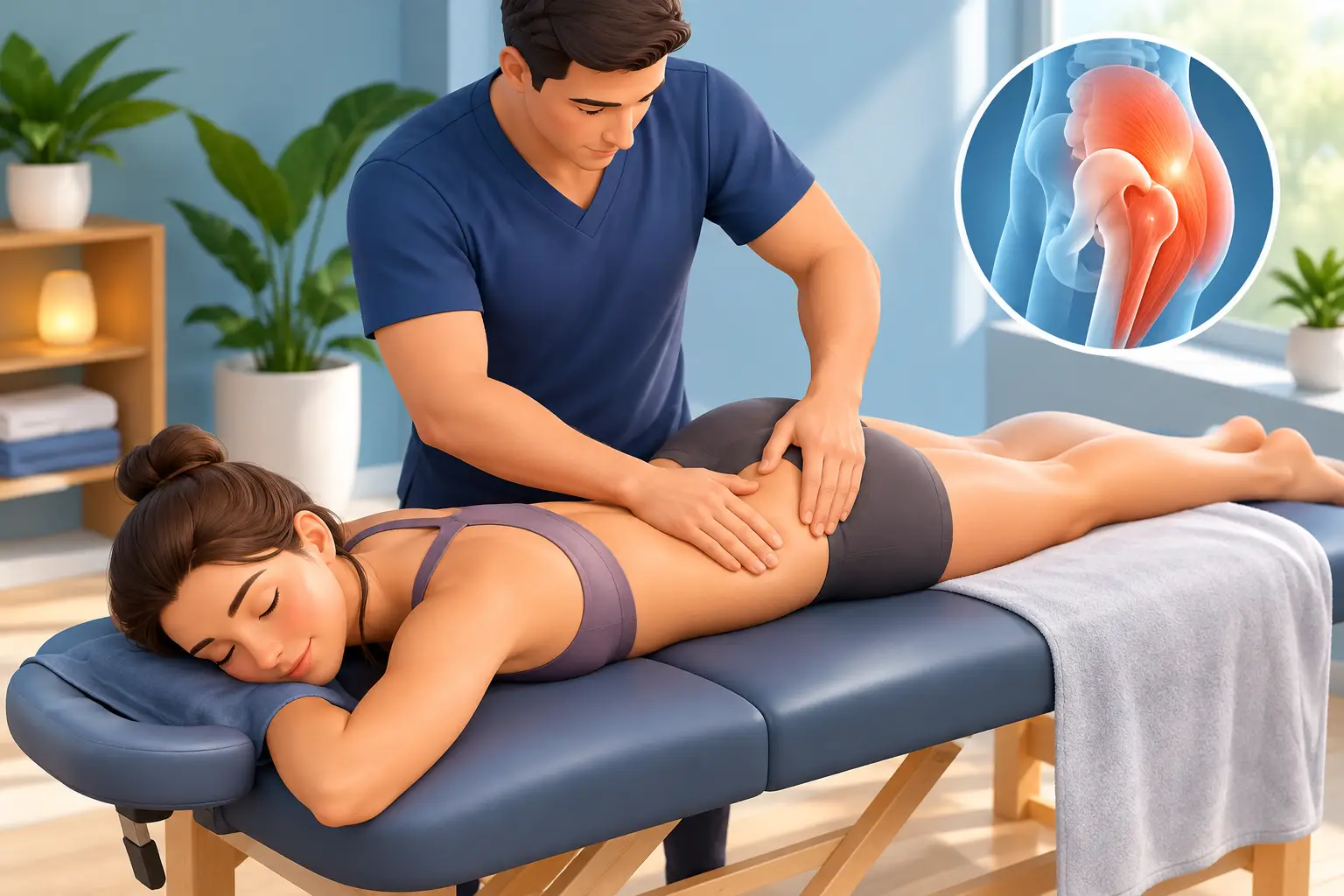
A tight hip can make a full workday feel much longer. You may notice it when you stand up from your desk, climb SEPTA steps, squat at the gym, or try to sleep comfortably on your side. The best massage for hip tightness is rarely one identical technique for every person. It is the massage that identifies what is creating your restriction, then works with your body at a pressure and pace that produces real change.
Hip tightness can come from long periods of sitting, repetitive training, an old injury, stress-related muscle guarding, or compensation from the low back, knees, feet, or pelvis. That is why a quick rub on the outer hip may feel good for an hour but not fully address the pattern. Targeted massage therapy can help calm overworked tissue, improve how the area moves, and leave you with a clearer sense of what your body needs.
What is the best massage for hip tightness?
For many people, a combination of deep tissue massage, myofascial release, and trigger point therapy offers the most useful approach. But the right answer depends on whether your hips feel stiff, sore, tender, weak, pinchy, or simply overworked.
A skilled session should not be a one-size-fits-all routine. Your therapist may work directly around the glutes, hip flexors, upper thighs, and outer hip, while also checking related areas such as the low back, hamstrings, adductors, calves, and feet. These tissues do not work in isolation. A hip that feels locked up may be responding to tension somewhere else in the chain.
The goal is not to force your hip open or push through sharp pain. The goal is to reduce unnecessary guarding and give your body a better opportunity to move comfortably.
Deep tissue massage for dense, stubborn tension
Deep tissue massage can be a great choice when your hips feel chronically tight, heavy, or restricted after activity. It uses slower, more focused pressure to work through deeper layers of muscle and connective tissue. For active adults, runners, cyclists, strength trainers, and people who sit for long stretches, this approach can be especially effective around the glutes, piriformis area, upper hamstrings, and hip flexors.
Deep tissue does not have to mean painful. Productive pressure often feels intense but manageable, and you should be able to breathe through it without bracing every muscle in your body. If you are holding your breath, tensing your jaw, or feeling a sharp or electric sensation, the pressure may be too much. More force is not automatically better bodywork.
Myofascial release for a pulling or stuck feeling
Myofascial release is often valuable when hip tightness feels broad, connected, or difficult to locate. Fascia is connective tissue that surrounds and links muscles throughout the body. When the area around the hips is restricted, you may feel pulling into the low back, thigh, or outer knee rather than one obvious knot.
This work is usually slower than a classic massage stroke. Your therapist may use sustained contact and gentle-to-firm stretching of the tissue, allowing the body time to soften rather than trying to muscle through resistance. It can be an excellent option for people who feel stiff after sitting, have limited range of motion, or find that aggressive massage leaves them more sore than relieved.
Trigger point therapy for specific tender spots
Do you have one spot in the glute or outer hip that hurts when you press it, then seems to refer discomfort into the thigh or low back? Trigger point therapy may help. A trigger point is a sensitive area in a muscle that can contribute to pain or altered movement beyond the spot itself.
For hip concerns, trigger point work may be used in the gluteal muscles, deep rotators, tensor fasciae latae, hip flexors, or adductors. It is focused work, not a random search for pain. The therapist applies intentional pressure, monitors your response, and follows it with movement or broader massage so the tissue has a chance to integrate.
Thai yoga massage for mobility and assisted stretching
Thai yoga massage brings assisted stretches, rhythmic compression, and supported movement into the session. It can be a wonderful fit when your hip tightness is paired with a general feeling of stiffness through the legs and low back. Instead of only working on a table, this style may involve comfortable positions that help mobilize the hips while keeping you supported.
This is not about forcing a dramatic stretch. The best results come from meeting your current mobility honestly and gradually encouraging more ease. Thai yoga massage can be especially appealing for people who want to feel both relaxed and physically refreshed after their session.
Swedish massage when stress is part of the tension
If your hips tighten when life gets demanding, Swedish massage should not be overlooked. Stress can increase muscle guarding, shorten your breathing, disrupt sleep, and make every ache feel louder. A relaxing massage can settle the nervous system while still including attention to the hips and legs.
Swedish massage may be the best starting point for a massage newcomer, someone recovering from a stressful season, or anyone who is highly sensitive to pressure. Relaxation and therapeutic work are not opposites. Often, a body that feels safe enough to let go responds better to focused treatment.
Why hip tightness is not always a hip problem
Your hips do a lot of work, but they also compensate for a lot. When the ankles are stiff, the feet are fatigued, the core is not engaging well, or the low back is overworking, the hips may take on extra demand. The same is true if you spend hours seated, repeatedly cross one leg, carry a child on one side, or train hard without enough recovery.
This is why an individualized session matters. If your outer hip is sore, for example, aggressive work directly on that tender spot may not be the whole answer. You may benefit from work in the glutes and lateral thigh, but also from attention to the adductors, hip flexors, low back, or feet. Your body tells a connected story.
At Life4orceTouch, treatment is built around that story, not a preset sequence. As a solo private practice, each session can be shaped around your pressure preferences, daily habits, activity level, and goals for relief and mobility. That is the difference between getting a massage and receiving intentional restorative bodywork!
What to expect from a therapeutic hip massage
Before hands-on work begins, be ready to describe what you feel and when you feel it. Mention whether the tightness is on one side or both, whether it affects walking, workouts, sitting, or sleep, and whether you have any past injuries or surgeries. Let your therapist know what has helped, what has aggravated it, and what type of pressure you enjoy or dislike.
During the massage, communication matters. You may be asked to bend your knee, gently move your leg, or breathe into a stretch while the therapist works. These small movements help reveal how the tissues respond and can make the work more specific. You remain covered with professional draping, and only the area being treated is uncovered as needed.
Afterward, you may feel looser immediately, or you may notice the biggest difference over the next day or two. Mild tenderness can happen after deeper work, especially if the area has been guarded for a long time. Hydrate, take an easy walk, and avoid treating post-massage soreness as a reason to attack the area with more intense stretching or exercise.
When massage needs to wait
Massage is a supportive wellness service, but it is not the right first step for every kind of hip pain. Seek medical evaluation promptly for a sudden inability to bear weight, severe or worsening pain, numbness or weakness, fever, unexplained swelling, pain after a significant fall, or changes in bladder or bowel control.
It is also wise to speak with a medical professional before massage if you have a recent surgery, fracture, blood clot history, active infection, inflammatory flare, or a condition that changes sensation or circulation. A thoughtful therapist will welcome that information and adjust the session or refer out when appropriate.
Make relief part of your routine
One excellent massage can create a meaningful reset, especially after travel, a demanding workout block, or weeks at a desk. Ongoing tightness, however, usually responds best to consistency. Depending on your goals, regular massage paired with simple movement, strength work, sleep, and recovery habits can help you maintain the progress you feel after the appointment.
You do not need perfect flexibility to deserve care. If your hips are asking for attention every time you get out of a chair or head out for a run, listen early. A personalized massage session can be a powerful place to begin feeling more comfortable, more mobile, and more at home in your body.