A shiatsu session can feel surprisingly different from a typical oil massage. Instead of slipping into a quiet spa routine and hoping for the best, you can expect focused, rhythmic bodywork that meets you where your body is holding tension. If you are wondering what to expect from shiatsu, think comfortable clothing, intentional pressure, supported stretching, and time to slow down without needing to perform relaxation perfectly.
Shiatsu is rooted in Japanese bodywork traditions and is often described as acupressure massage. The practitioner uses hands, palms, thumbs, forearms, and sometimes gentle stretches to address areas that feel tight, overworked, stuck, or simply out of balance. It can be deeply calming, but it is also an active therapeutic experience for people who want more than a standard rubdown.
What to Expect From Shiatsu During Your Visit
Your session should begin with a conversation, not a one-size-fits-all routine. You may be asked what is bothering you, how your stress has been lately, whether you have any injuries or health concerns, and what you would most like to feel when you leave. Maybe your shoulders have been living near your ears after long days at a desk. Maybe your hips feel limited after training, commuting, or standing on your feet. Maybe you are carrying the kind of stress that makes your whole body feel braced.
That information matters. Shiatsu is not about chasing pain or pressing every point with the same intensity. Your practitioner can adjust the pressure, focus, positioning, and pace based on your goals and how your body responds in the moment.
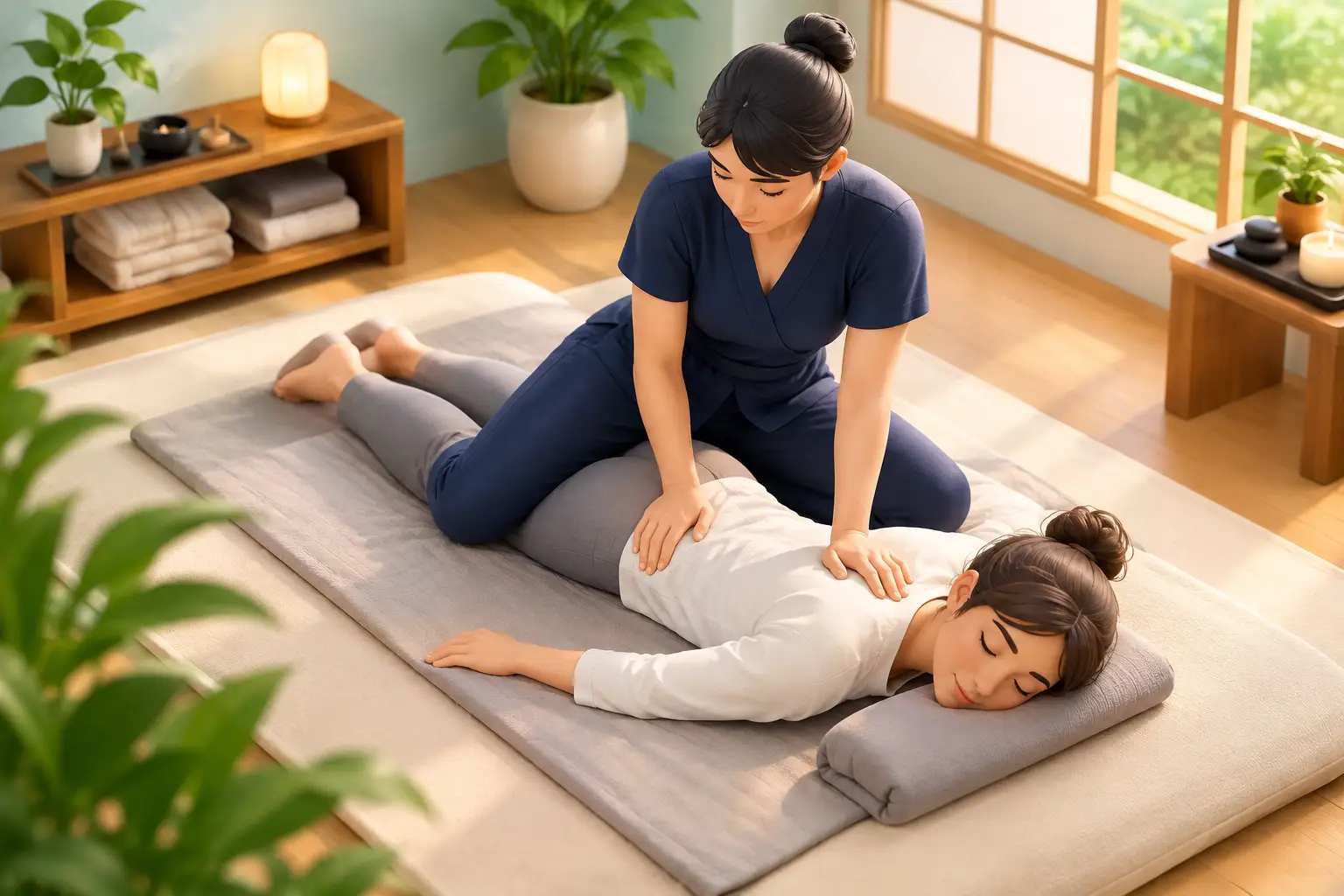
Unlike many Swedish or deep tissue sessions, shiatsu is commonly performed with the client fully clothed. You will usually wear soft, flexible clothing that allows you to bend, breathe, and move comfortably. Think yoga clothes, a T-shirt, joggers, leggings, or loose athletic wear. Heavy denim, restrictive waistbands, bulky hoodies, and slippery fabrics can make it harder to receive the work comfortably.
Some shiatsu sessions take place on a mat or futon close to the floor. Others may be adapted to a massage table, especially when that setup is safer or more comfortable for the client. The setting can vary, but the intention remains the same: give your body enough support to relax while allowing the practitioner to apply steady, grounded pressure.
Pressure Points, Stretching, and the Feeling of the Work
Shiatsu often includes sustained pressure along areas of the body sometimes called meridians or energy pathways. You do not have to understand that framework for the session to be useful. What you may notice is pressure along the back, neck, shoulders, arms, hands, hips, legs, feet, or jaw – places where many busy people store a great deal of physical and emotional tension.
The pressure is usually slower and more deliberate than a fast-paced massage. Rather than gliding across the skin with lotion or oil, the practitioner may hold a point for several breaths, lean in with a palm, or use a thumb to work into a small, tender area. At times, the sensation may be comfortably intense. You might recognize a familiar knot, an ache that refers into another area, or a release that feels like your body finally got permission to let go.
Shiatsu can also include gentle assisted movement and stretches. Your arms, legs, hips, or shoulders may be moved through a comfortable range of motion while you stay as relaxed as possible. This can feel wonderful for clients whose bodies are stiff from workouts, repetitive work, sitting, driving, or stress. It may also show you where you are guarding or where your movement feels limited.
Intensity is not a badge of honor. Productive pressure should feel clear and purposeful, not sharp, alarming, or impossible to breathe through. If you are tensing, holding your breath, or trying to endure the work, say something. Good therapeutic bodywork is collaborative. A simple request for less pressure, more time in one area, or a different position can make the session far more effective.
What Makes Shiatsu Different From a Traditional Massage?
Both shiatsu and table massage can support relaxation, muscular comfort, and everyday wellness, but they feel different in practice. Swedish massage typically uses oil or lotion with long, flowing strokes. Deep tissue massage may use slower, firmer techniques to address deeper layers of tightness. Shiatsu generally relies on compression, point work, rhythmic contact, and assisted stretching through clothing.
For some people, shiatsu feels less like being passively massaged and more like being carefully reset. The work can be quiet, grounding, and meditative, yet it may still address stubborn areas of tension. It can be especially appealing if you prefer to remain clothed, enjoy stretching, want focused hand and foot work, or find that your body responds well to steady pressure instead of slippery massage strokes.
That said, no modality is automatically the right fit for every person or every day. Someone with significant muscle soreness after a demanding workout may prefer a blend of shiatsu and gentler massage techniques. A person seeking pure relaxation may want more Swedish massage. At Life4orceTouch, the goal is not to force your body into a preset service menu. It is to choose an approach that makes sense for your needs.
How to Prepare for Your First Shiatsu Appointment
You do not need an elaborate routine before shiatsu, but a little preparation helps you get more from your time. Arrive a few minutes early so you are not rushing in with your nervous system still in commute mode. Have a light meal rather than showing up overly full or very hungry, and drink water as you normally would.
Wear comfortable clothes you can move in, and be ready to communicate openly. Before your session, mention recent injuries, surgeries, pregnancy, numbness or tingling, joint replacements, blood clotting concerns, skin sensitivities, or any condition that affects pressure or positioning. Shiatsu can be adapted in many ways, but your practitioner needs accurate information to work thoughtfully.
It also helps to arrive with a simple intention. You do not need a perfect explanation of what is wrong. “My upper back feels locked up,” “I cannot get comfortable at night,” or “I need to come down from a stressful week” is plenty to start with.
What You May Feel After Shiatsu
Many clients leave feeling calmer, looser, and more aware of their body. You may notice easier breathing, more space through the shoulders and hips, or a pleasant heaviness that makes you want to rest. Others feel energized, especially if they arrived feeling sluggish or mentally foggy.
Because shiatsu can bring attention to areas you have been ignoring, you may also feel mild tenderness afterward, much like you might after a workout or focused bodywork session. This is not guaranteed, and stronger is not always better. Give yourself room to notice how you feel over the next day rather than rushing immediately back into intense activity.
After your appointment, drink water, eat nourishing food, and consider keeping the rest of the evening a little less packed if possible. A short walk, gentle movement, a warm shower, or an earlier bedtime can help you stay connected to the benefits of the session. If something feels unusually painful, concerning, or does not settle, contact your healthcare provider and let your practitioner know.
A Session Should Feel Personal, Not Preset
The best shiatsu session is not the one with the most pressure or the most impressive stretch. It is the one that helps you feel heard, supported, and more at home in your own body. Whether you are a first-time massage client, a weekend athlete, a busy professional, or someone tired of carrying stress in your neck and back, shiatsu offers a grounded way to pause and receive skilled care.
Come as you are, wear clothes you can move in, and speak up about what you need. Your body gives useful feedback when it is given the time and attention to be heard.