Your glutes are supposed to help you stand up, climb stairs, walk hills, run, squat, and get up from your chair without your low back or knees doing all the work. When you improve glute movement patterns, the goal is not simply to make your glutes burn during a workout. The goal is to help your body share load more efficiently so everyday movement feels stronger, smoother, and less draining.
For busy Philadelphia professionals, active adults, and athletes, glute tightness or weakness often shows up as a familiar pattern: achy hips after sitting, a cranky low back after lifting, knees that cave inward during squats, or hamstrings that always feel like they are working overtime. That does not automatically mean your glutes are “off.” It usually means your movement strategy deserves a closer look.
Why Glute Movement Patterns Matter
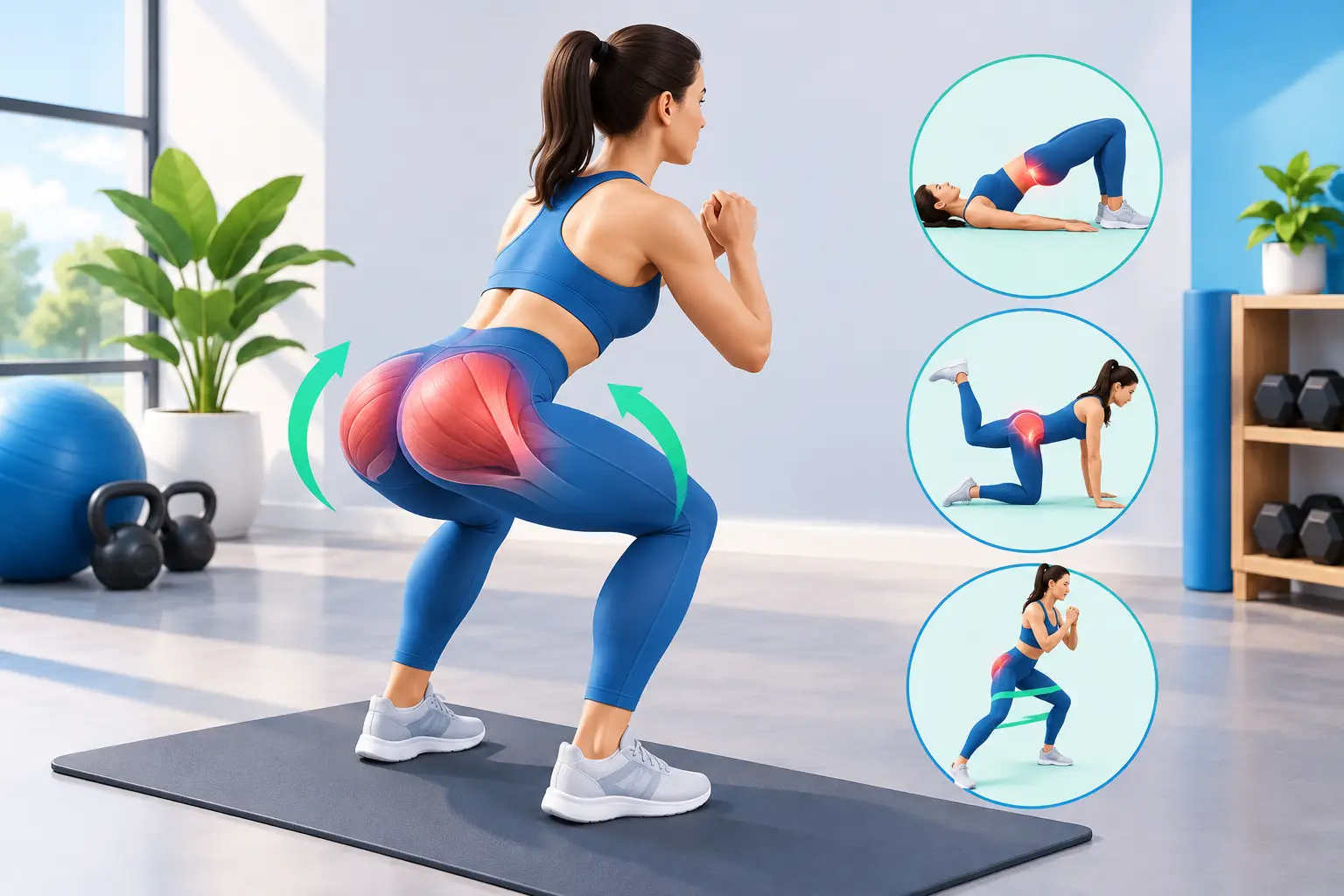
The gluteal muscles are a team. The gluteus maximus helps extend the hip, especially when you rise from a chair, climb, sprint, or hinge. The gluteus medius and smaller hip muscles help control the pelvis and thigh when you stand on one leg, walk, change direction, or step onto a curb.
When this team is not contributing well, your body still gets the job done. It may recruit more from the low back, hamstrings, hip flexors, calves, or the front of the thighs. That compensation is not a personal failure. It is your nervous system choosing the option that feels available under the circumstances.
The trade-off is that repeated compensation can leave certain areas feeling overworked. A person who sits for long stretches may feel stiffness in the front of the hips. A runner may notice one side of the low back gripping. Someone who lifts may feel every squat in the knees instead of the hips. Building better movement patterns gives your body more options.
Improve Glute Movement Patterns Before Adding More Weight
More resistance is not always the answer. If a heavy squat, deadlift, or lunge repeatedly shifts into your back, knees, or hamstrings, adding weight can reinforce the very pattern you are trying to change. Start by making the movement easier to feel, then gradually make it stronger.
Start with your breathing and rib position
Your glutes work with the rest of your trunk, not separately from it. Before a bridge, squat, or hinge, take a calm breath in through your nose. As you breathe out, let your ribs settle over your pelvis instead of flaring your chest upward. Think of gently tightening a belt one notch, not bracing as hard as possible.
This position can reduce the urge to overarch the low back. If you feel a bridge mainly in your lumbar spine, make the range smaller, exhale slowly, and pause before lifting. A small, controlled bridge is more useful than a high bridge that turns into a backbend.
Relearn the hip hinge
A hip hinge teaches you to send the hips back while keeping the spine long and the feet grounded. It is one of the clearest ways to practice hip extension without asking the knees to do everything.
Stand with feet about hip-width apart and soften your knees. Reach your hips back as though you are closing a car door behind you. Keep pressure through the whole foot, especially the heel and base of the big toe. Then press the floor away and stand tall by bringing the hips forward.
You should feel your hamstrings lengthen on the way down and your glutes contribute as you stand. You do not need to squeeze your buttocks with maximum force at the top. Over-squeezing can make the pelvis tuck under and create unnecessary tension. A strong finish feels tall, balanced, and supported.
Use bridges with purpose
Glute bridges are popular because they are accessible, but the details matter. Lie on your back with knees bent and feet planted. Place your feet close enough that you can reach your heels with your fingertips, then gently exhale and lift your hips only as high as you can without back discomfort.
Pause for two breaths at the top. Notice whether both feet feel equally grounded and whether one hamstring cramps. Hamstring cramping is common, especially when the feet are too far away or the pelvis is moving too fast. Bring your feet slightly closer, lower the lift, and try again.
Once a basic bridge feels easy, try a staggered stance bridge or a slow marching bridge. These variations ask the pelvis to stay organized as the load changes from side to side. Quality beats repetition every time.
Train single-leg control
Walking is a series of single-leg stands. That is why side-lying leg lifts, controlled step-downs, and supported single-leg balance can be valuable. The purpose is not to throw your leg as high as possible. It is to keep the pelvis from rolling backward and the knee from collapsing inward while the hip muscles do their job.
For a simple practice, stand beside a wall or chair for support. Shift your weight onto one foot, keeping your pelvis level. Let the other foot hover for five slow breaths. If you feel your standing foot gripping hard, spread your toes and soften the effort slightly. Repeat on the other side.
This kind of work can reveal side-to-side differences, but do not assume the less steady side is “bad.” It may be less practiced, more fatigued, or simply having a different day.
Mobility Helps, but It Is Not the Whole Story
Tight hips are often blamed for every lower-body issue. Sometimes mobility work is useful, especially when prolonged sitting leaves the hip flexors, inner thighs, or outer hip feeling restricted. But flexibility alone does not teach your body how to use its available range during a squat, stride, or lunge.
Pair gentle mobility with an active movement. After a hip flexor stretch, do a few slow bridges or bodyweight hinges. After opening the inner thighs, practice a supported lateral lunge. This gives your nervous system a chance to use the range you just created.
Avoid forcing a deep stretch into sharp pain, pinching, numbness, or tingling. More range is not always better. The useful range is the range you can control comfortably.
Everyday Habits That Change the Pattern
You do not need an hour-long glute routine every day. Small movement interruptions can make a real difference when your day is built around a desk, driving, or standing in one place.
Try standing up every 45 to 60 minutes for a brief walk, a few hinges, or several sit-to-stands from your chair. When carrying groceries or a work bag, switch sides instead of always loading one shoulder. On stairs, slow down enough to press through the whole foot rather than pulling yourself up with the railing and lower back.
Recovery counts, too. Poor sleep, high stress, and demanding training can make muscles feel guarded and heavy. On those days, a lighter walk, easy mobility, and a few well-controlled repetitions may serve you better than pushing through a hard lower-body workout.
When Hands-On Bodywork Can Help
Sometimes you understand the exercise cue but still cannot access the movement comfortably. Persistent tension in the hips, low back, thighs, calves, or feet can change how you move. Targeted massage therapy and restorative bodywork may help reduce the sensation of restriction, support circulation, and make it easier to practice more balanced movement afterward.
At Life4orceTouch, individualized sessions can combine approaches such as deep tissue massage, myofascial release, trigger point therapy, Thai yoga massage, and cupping based on what your body needs that day. Bodywork is not a replacement for strength training, medical evaluation, or physical therapy when those are needed. It can be a powerful complement, especially when you pair your session with simple movement practice between appointments.
If pain is severe, follows a fall or accident, causes weakness or numbness, wakes you consistently at night, or keeps getting worse, seek evaluation from an appropriate medical professional. The smartest movement plan respects both your goals and your symptoms.
Your glutes do not need to be punished into performing. Give them clear positions, manageable load, enough recovery, and regular practice. Over time, the reward is not just a better workout. It is the confidence of moving through your day with more ease, strength, and support!