
Your shoulders are up near your ears after a long week. Your lower back feels guarded after workouts, commuting, or hours at a desk. You want relief, but Swedish massage versus deep tissue can sound like a simple choice between gentle and intense. It is more useful to think about the outcome you want from your session: calm, circulation, movement, targeted muscle work, or a thoughtful combination of all of the above.
A great massage is not a contest to see how much pressure you can tolerate. It is hands-on care that meets your body where it is today. Some days, that means long, soothing strokes that settle your nervous system. Other days, it means focused work on the places that keep pulling you out of comfortable movement.
Swedish massage versus deep tissue: the real difference
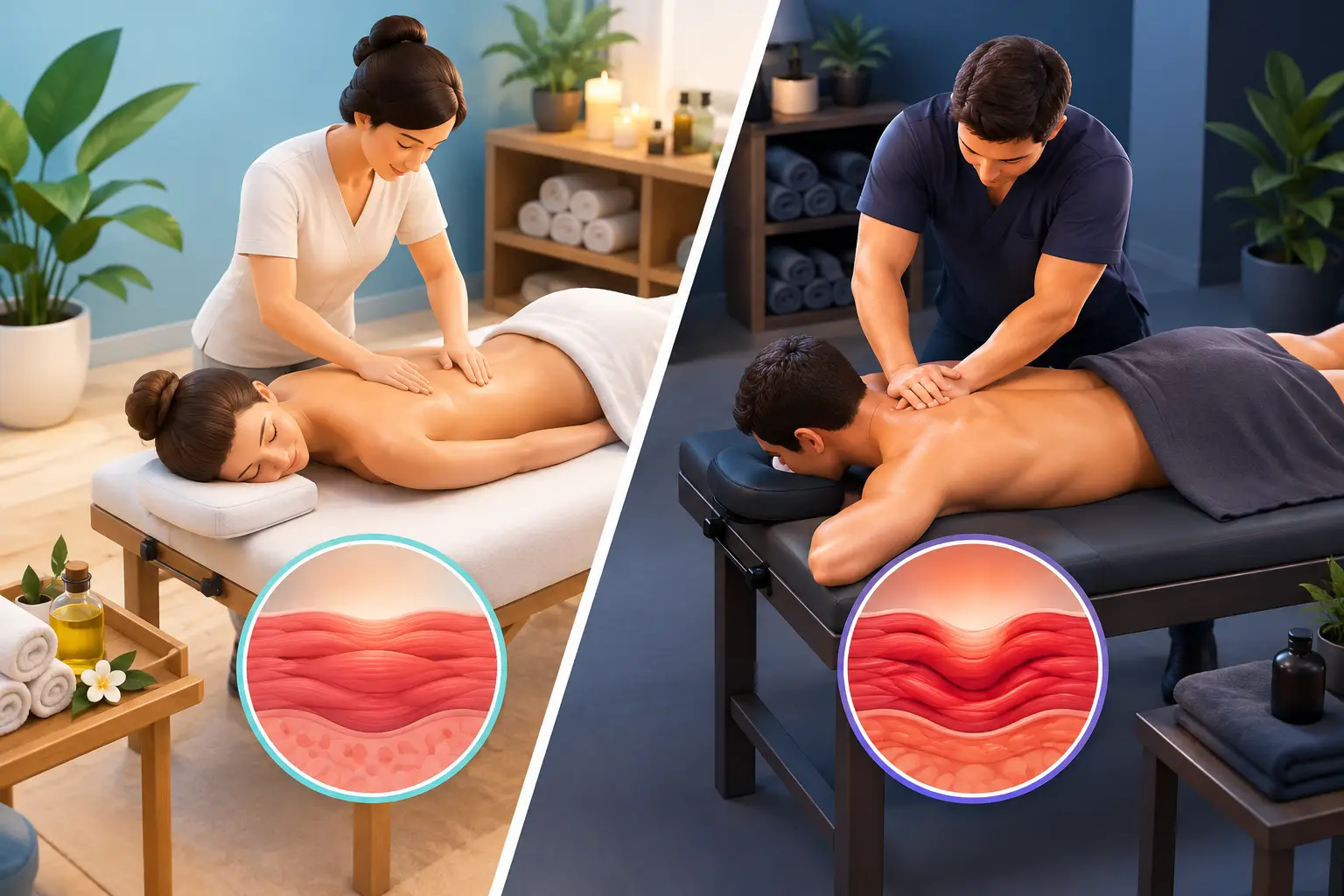
Swedish massage is generally designed to support relaxation and whole-body ease. It commonly uses long gliding strokes, kneading, gentle friction, and rhythmic movements. Pressure can range from light to firm, but the intention is usually broad rather than highly specific. Think of it as giving your entire system room to exhale.
Deep tissue massage is more targeted. It works more deliberately with persistent tightness and restrictions in deeper layers of muscle and connective tissue. The pace may be slower, with sustained pressure and focused attention on particular areas such as the neck and shoulders, hips, glutes, calves, or lower back. Deep tissue work is not automatically painful, and it should never feel like you have to brace against the table to get through it.
Both approaches can include a range of pressure. A Swedish massage can be pleasantly firm, while deep tissue can be measured and precise without being punishing. The defining difference is less about force and more about purpose, technique, and where the therapist directs the work.
When Swedish massage may be the better fit
Swedish massage is often an excellent choice when stress has been living in your body for too long. Maybe sleep has been off, your mind has been racing, or you simply feel depleted from caring for everyone except yourself. The steady, full-body approach can help you shift out of that clenched, overextended feeling and reconnect with a sense of comfort.
It also makes sense for first-time massage clients, people who are touch-deprived, and anyone returning to bodywork after a long break. Relaxation is not an extra or a luxury. When your system gets a chance to settle, you may notice easier breathing, less jaw tension, and a more grounded relationship with your body.
When deep tissue may be the better fit
Deep tissue massage may be a stronger match when you can point to a pattern that keeps coming back. Perhaps one hip always feels limited on your runs, your shoulders tighten every time work gets busy, or your calves stay hard after training. Targeted work can help address the muscular tension and movement restrictions contributing to that pattern.
This does not mean deep tissue is the right answer for every ache. Recent injuries, inflammation, unusual swelling, numbness, fever, and unexplained pain deserve appropriate medical attention first. Massage therapy can be a powerful part of your wellness and recovery routine, but it does not replace medical diagnosis or care when that is needed.
Choose based on what your body needs today
Ask yourself one honest question before booking: Do I need to decompress, or do I need focused work on a specific problem area? If the answer is decompress, Swedish massage may give you exactly the reset you need. If a stubborn area is affecting how you move, train, work, or rest, deep tissue may be more appropriate.
Your answer can change from month to month or even week to week. A Philadelphia professional carrying deadline stress in their upper back may want a relaxing full-body session one visit, then more focused neck, shoulder, and forearm work after a particularly demanding stretch. An active client may want targeted glute and leg work during training, followed by a gentler session after an event.
Recovery time matters, too. Swedish massage tends to leave most people feeling calm, loose, and ready to continue their day. Well-paced deep tissue work can also feel wonderful, but some temporary tenderness is possible, especially if an area has been tense for a long time. Plan hydration, gentle movement, and a little space to notice how your body responds rather than scheduling an intense workout immediately afterward.
Pressure is not the same as progress
More pressure is not always more therapeutic. If pressure makes you hold your breath, tighten your muscles, or mentally check out, your body may be protecting itself rather than receiving the work. Productive massage pressure should feel manageable, specific, and adjustable.
Communication makes all the difference. Tell your massage therapist when pressure is too much, too little, sharp, numb, or simply not reaching the area you hoped to address. You do not need to prove your toughness. The most effective session is the one where your feedback helps shape the work in real time.
This is especially true with chronic tightness. A muscle that has been overworking for years rarely needs to be forced into change in one appointment. Consistent, skillful bodywork combined with rest, mobility practices, strength work, and daily habits often creates a more lasting result than one overly aggressive session.
A customized session can use both approaches
You do not always have to choose one lane. Many people benefit from a session that begins with Swedish-style strokes to warm the tissue and help the body settle, then moves into focused deep tissue work where it is genuinely needed. That approach can be especially helpful if your whole body feels stressed but one area, such as your low back or shoulders, needs extra attention.
At Life4orceTouch, care can also be tailored with therapeutic techniques such as myofascial release, trigger point therapy, cupping, Thai yoga massage, or hot stone massage when appropriate for your goals. The point is not to pile on modalities. It is to use the right hands-on tools for your comfort, movement, and recovery needs.
A thorough intake matters here. Share what has changed since your last massage, what activities leave you sore, where you feel restricted, and what kind of pressure has worked or failed in the past. Even details that seem small, such as a new workout routine, a long drive, or sleeping differently, can guide a more useful session.
What to say before your appointment
You do not need massage vocabulary to get personalized care. Plain language works beautifully. You might say that you want to relax but your right shoulder is always tight, that you are training for a race and your calves feel heavy, or that you had deep work before and felt sore for three days afterward.
Also mention surgeries, injuries, medications, pregnancy, skin sensitivities, circulation concerns, and any health changes. Good therapeutic massage is collaborative. The more clearly you can describe your goals and boundaries, the better your session can support you.
Make bodywork part of your maintenance plan
Massage is most valuable when it supports the life you are already living. For some people, that means a Swedish massage every few weeks to manage stress before it becomes physical tension. For others, it means periodic deep tissue work to support training, desk-work posture, or recurring areas of restriction. There is no prize for choosing the strongest option. There is real value in choosing the care that helps you feel more at home in your body.
Listen to what your body has been asking for, then give it a consistent place to recover, move more freely, and feel cared for. Your next session can be both restorative and purposeful!