A massage should not feel like something you have to endure to get results. The right pressure can quiet a racing mind, soften guarded muscles, and help you move with more ease. This massage pressure guide can help you communicate what your body needs, whether you are booking your first session or you already know the difference between a relaxing Swedish massage and focused therapeutic bodywork.
Pressure is personal. A runner with dense calves may enjoy steady, specific work in the legs but need a much lighter touch around the neck. Someone carrying work stress in their shoulders may think they need deep pressure, when what they actually need is enough time, warmth, and skilled attention for the tissue to let go. Great massage is not about proving how much pressure you can handle. It is about choosing pressure that gives your body a useful, restorative response!
What Massage Pressure Actually Means
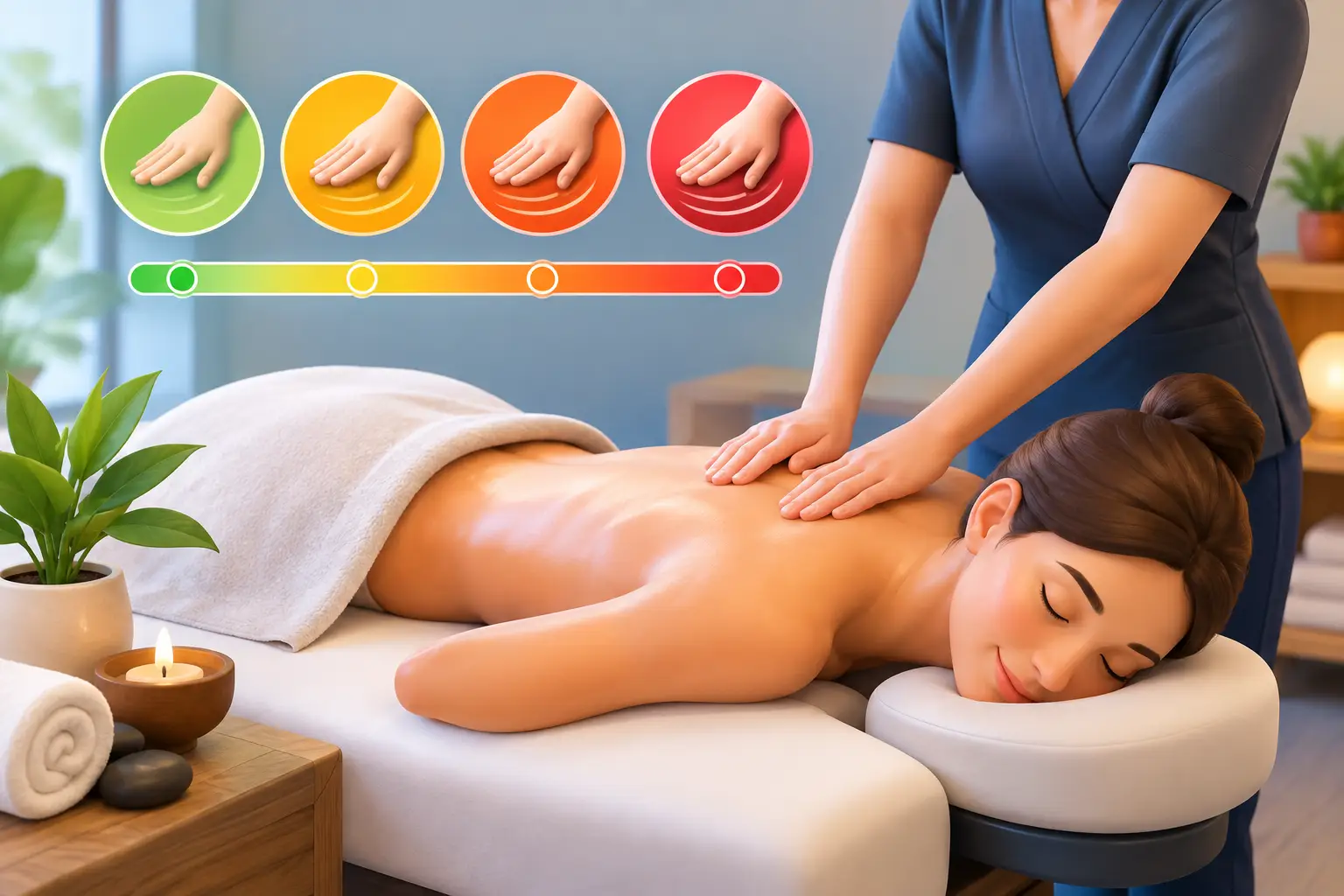
Massage pressure is more than light, medium, or deep. It includes how much force is applied, how slowly the therapist works, the size of the contact area, and how long attention stays on one place. Broad palms can create a calming, grounding sensation without feeling intense. A focused thumb, forearm, elbow, or therapeutic tool can reach a smaller area with much more precision.
Pressure also changes throughout a session. Your therapist may begin more gently to warm tissue, assess areas of tension, and give your nervous system time to settle. Once your body is receptive, more focused work may be appropriate in places that feel restricted, overworked, or achy. That progression matters. Going too deep too fast can make muscles brace instead of release.
A useful rule is this: productive pressure feels intense but manageable. You can breathe normally, keep your jaw unclenched, and stay present. If you are holding your breath, curling your toes, tightening your shoulders, or waiting for the stroke to end, the pressure has probably crossed from therapeutic into too much.
The Massage Pressure Guide: Light, Medium, or Deep?
Light pressure: calming, circulation-focused care
Light pressure is often misunderstood as a lesser massage. It is not. It can be deeply effective for stress reduction, touch deprivation, sensitive areas, post-workout recovery, and people who simply want to feel rested rather than worked over.
Swedish massage commonly uses lighter to moderate pressure with long, flowing strokes, gentle kneading, and a relaxed pace. It is an excellent choice when your nervous system needs a break, when you are new to massage, or when life has you feeling overstimulated. Light pressure may also be appropriate when you are sore, fatigued, or easing back into bodywork after a long gap.
Even with a light touch, a skilled therapist can identify patterns in the body, encourage circulation, and create that wonderful feeling of having more room to breathe. Do not underestimate it because it does not hurt. Relaxation is not a luxury response. For many busy people, it is the first step toward better sleep, easier movement, and a less reactive body.
Medium pressure: the versatile middle ground
Medium pressure is where many clients find their sweet spot. It offers enough depth to address common tightness in the back, hips, legs, and shoulders while still allowing the body to remain calm. If you sit at a desk, train regularly, carry kids, stand for work, or deal with everyday muscle fatigue, medium pressure often provides satisfying relief without leaving you feeling depleted.
This level can include therapeutic techniques such as focused kneading, compression, stretching, and slower work along muscular patterns. It works especially well when the goal is both relaxation and better mobility. You may notice tender spots, but the sensation should feel like a productive conversation with the body, not a battle.
Medium pressure is also a smart place to start if you believe you want deep tissue massage but are not sure. Your body can always invite more pressure. It is much harder to undo pressure that was too aggressive from the beginning.
Deep pressure: targeted work, not constant intensity
Deep pressure is best used with purpose. It can be helpful for longstanding muscle tightness, restricted movement, active training demands, and stubborn areas that have not responded to lighter work. Deep tissue massage, myofascial release, trigger point therapy, cupping, and Thai yoga massage may all involve deeper or more focused sensations, but they do not need to feel punishing to be effective.
A deeper session should still include variation. Muscles and connective tissue respond better when a therapist listens with their hands, works gradually, and adapts to your response. Constant heavy pressure across the entire body can leave you sore, drained, or guarded. Targeted depth, balanced with broader calming strokes and movement, is often far more useful.
Deep work may not be the right choice if you are already highly stressed, sleep-deprived, dehydrated, fighting an illness, or feeling unusually sensitive. The strongest pressure is not automatically the most therapeutic pressure. Your needs on a high-energy training week can be completely different from your needs after a difficult month at work.
How to Tell if Pressure Is Helping
During your massage, check in with your breathing. A slow exhale, a feeling of warmth, and a gradual softening around the area are good signs. You may experience a brief, manageable tenderness when a tight spot is addressed, especially with trigger point or myofascial work. But intensity should ease as the therapist adjusts, changes angle, or gives the tissue time to respond.
Pain that feels sharp, burning, electric, pinching, numb, or frightening is not something to push through. Say something immediately. The same applies if pressure causes you to tense up, sweat from discomfort, or feel like you need to escape the table. Clear feedback allows your massage therapist to modify the technique, use a broader contact area, slow down, or work related areas first.
Afterward, it is normal to feel relaxed, pleasantly tired, or mildly tender in places that received focused work. Significant bruising, severe soreness, or pain that gets worse after the session is not the goal. Let your therapist know what you experienced before your next appointment so the plan can be adjusted.
What to Say Before and During Your Session
You do not need massage vocabulary to advocate for yourself. Simple, honest language is enough. Before the session, share where you feel tight, what activities affect your body, what kind of pressure you usually like, and what you hope will feel different when you leave.
During the massage, try phrases such as, “A little lighter there,” “That pressure is perfect,” “Can you stay there for a moment?” or “The pressure is fine, but that spot feels too sharp.” Your therapist wants that information. Personalized bodywork depends on communication, not guesswork.
It also helps to name your goal. If your main goal is stress relief, say so. If you need support for hip mobility before a race, mention that. If your shoulders have felt locked up since a long work project, that context can guide the session. A massage for recovery should not look exactly like a massage for relaxation, even when both include similar techniques.
When Lighter Is the Smarter Choice
Always tell your therapist about recent injuries, surgery, pregnancy, medications, health conditions, skin sensitivities, or anything else that could affect your session. Some situations call for modified pressure, avoiding a specific area, or checking with a medical professional first. Massage can be an excellent part of self-care and recovery, but it should work alongside appropriate medical care, not replace it.
Lighter or modified work may be especially appropriate when you have acute inflammation, unexplained pain, fever, active illness, sunburn, a fresh injury, or unusual swelling. If you are unsure, ask before your appointment. A thoughtful therapist will help you choose a safe, comfortable direction.
At Life4orceTouch, every session is an opportunity to listen to what your body is saying and respond with care. From soothing Swedish massage to focused deep tissue, myofascial release, Thai-inspired stretching, and reflexology, the best modality is the one that meets you where you are that day.
Your body does not need to earn care by being in extreme pain. Choose pressure that lets you breathe, soften, and leave feeling more connected to yourself. That is the kind of massage support you can return to again and again!