
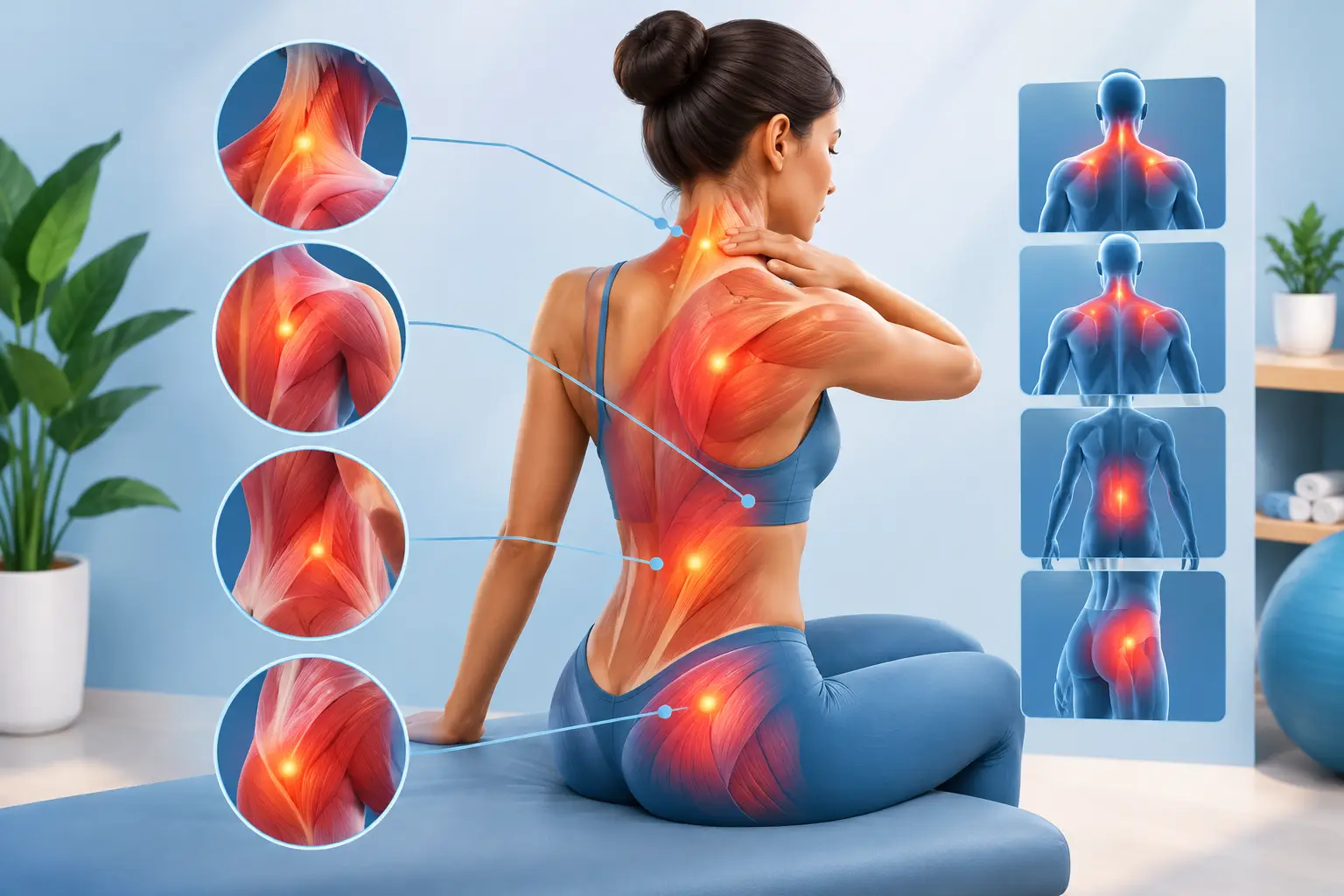
A stubborn ache between your shoulder blades may not begin between your shoulder blades. That nagging headache may have more to do with tight neck and jaw muscles than the spot where you feel the pain. Myofascial pain patterns help explain why discomfort can seem to travel, linger, or return even after you stretch the area that hurts.
For busy Philadelphia professionals, athletes, caregivers, and anyone carrying stress in their body, this can be frustrating. You know something feels tight, restricted, or sore, but the painful spot is not always the whole story. Thoughtful bodywork looks beyond the loudest symptom to consider the muscles, connective tissue, posture, repetitive habits, and stress load affecting how your body moves.
What Are Myofascial Pain Patterns?
Fascia is a web of connective tissue that surrounds and supports muscles, bones, nerves, and organs. Ideally, this tissue glides smoothly as you move. Repetitive movement, old injuries, long hours at a desk, intense training, emotional stress, limited recovery, and everyday tension can all contribute to areas that feel dense, tender, shortened, or less mobile.
When a muscle and its surrounding fascia become irritated or overly tense, they can develop sensitive spots often called trigger points. Pressing or loading one of these areas may create local tenderness, but it may also send discomfort somewhere else. That predictable spread of discomfort is often described as a referred pain pattern.
This is why rubbing the place that hurts can feel good for a few minutes but fail to create lasting change. The body may need attention at the source, along the surrounding tissues, and in the movement habits that keep asking too much of the same area.
Common Myofascial Pain Patterns in Daily Life
One of the most common patterns begins in the upper trapezius, levator scapulae, and other neck-and-shoulder muscles. Hours spent looking down at a phone, working at a laptop, driving, or carrying stress through raised shoulders can leave these tissues overloaded. The result may be neck stiffness, aching at the top of the shoulders, or headaches that seem to wrap around the side of the head.
Jaw tension can also be part of the picture. Clenching, grinding, and stress can overwork the muscles around the jaw, temples, and neck. Some people notice facial soreness, temple headaches, tenderness near the ears, or a tired feeling in the jaw after a demanding week.
Low back discomfort is another area where patterns matter. Tight hip flexors, glutes, deep hip rotators, hamstrings, abdominal tissues, and lower back muscles can all influence how the pelvis and spine move. The right approach depends on the person. A runner with tight hips, a warehouse worker lifting all day, and a desk-bound professional may all say their low back hurts, yet need very different work.
The hips and legs frequently carry their own confusing signals. Trigger points in the glutes can refer discomfort down the leg, while tight calves and foot muscles can contribute to strain farther up the chain. This does not mean every leg symptom is muscular. It means a careful assessment should consider how the whole area is working together.
Why Pain Can Feel So Unpredictable
Pain is not always a simple map of tissue damage. Your nervous system interprets input from muscles, joints, fascia, nerves, previous injuries, stress, sleep, and activity levels. If an area has been overloaded for months, it may become more sensitive and protective. The body may limit motion, brace surrounding muscles, or create discomfort during movements that once felt easy.
That is why no two sessions should be identical. Some clients benefit from focused trigger point therapy and slow myofascial release. Others need broader Swedish massage techniques first because their system is stressed, guarded, and not ready for deep work. For an active client, recovery-focused bodywork may be paired with mobility suggestions and a realistic conversation about training volume.
More pressure is not automatically better. Deep tissue work can be valuable when it is skillfully paced, but pain that makes you hold your breath, tense harder, or feel bruised for days is not the goal. Effective therapeutic massage respects your feedback and works with your body rather than trying to overpower it.
How Personalized Bodywork Can Help
A session focused on myofascial discomfort begins with listening. Where do you feel the pain? What movements bring it on? Is it worse after sleep, work, workouts, sitting, or stress? Have you had an old injury, surgery, accident, or sudden change in activity? These details help identify useful areas to assess without pretending that every ache has one easy answer.
At Life4orceTouch, the work can draw from a broad therapeutic toolkit rather than a one-size-fits-all routine. Myofascial release may be used to encourage more ease through restricted tissue. Trigger point therapy can address particularly tender muscular areas with measured pressure. Deep tissue massage, cupping, Thai yoga massage, stretching, and reflexology may also have a place, depending on your goals, comfort level, and presentation.
The goal is not simply to chase pain from one spot to another. It is to help reduce unnecessary tension, improve tissue glide, restore more comfortable movement, and give your nervous system a chance to settle. Many clients notice relief after one session, especially when stress and muscular overload are recent. Long-standing patterns usually respond best to consistent care, not a single heroic appointment.
What You Can Do Between Sessions
Bodywork works best when it fits into real life. You do not need a perfect wellness routine to support your progress. Small changes performed consistently can make a meaningful difference.
Start by noticing the positions you repeat all day. If you work at a screen, take brief movement breaks before your neck and shoulders feel locked up. If you train hard, build recovery days into the week instead of waiting until pain forces you to stop. If you clench your jaw, check in during traffic, emails, and difficult conversations, then let the tongue rest gently and allow the teeth to separate.
Hydration, sleep, and regular walking can support recovery, too. Gentle movement is often more useful than aggressively stretching a very tender muscle. If a stretch produces sharp pain, numbness, tingling, or symptoms that travel strongly down an arm or leg, stop and get appropriate medical guidance.
When Massage Is Not the First Step
Massage therapy can be an excellent part of a pain-management and wellness plan, but it does not replace medical diagnosis. Seek prompt medical care for chest pain, sudden severe headaches, new weakness, loss of coordination, fever with unexplained pain, major swelling, pain after a significant accident, or changes in bladder or bowel control.
Persistent numbness, tingling, radiating pain, unexplained weight loss, or symptoms that worsen steadily also deserve evaluation from a qualified medical professional. Massage can often work alongside physical therapy, chiropractic care, osteopathic care, and other health services, but the safest plan depends on what is happening in your body.
Your pain has a story, and it deserves more than a rushed, generic solution. Pay attention to the patterns, choose care that listens to your feedback, and give your body the consistent support it needs to move, recover, and feel more like itself again.