
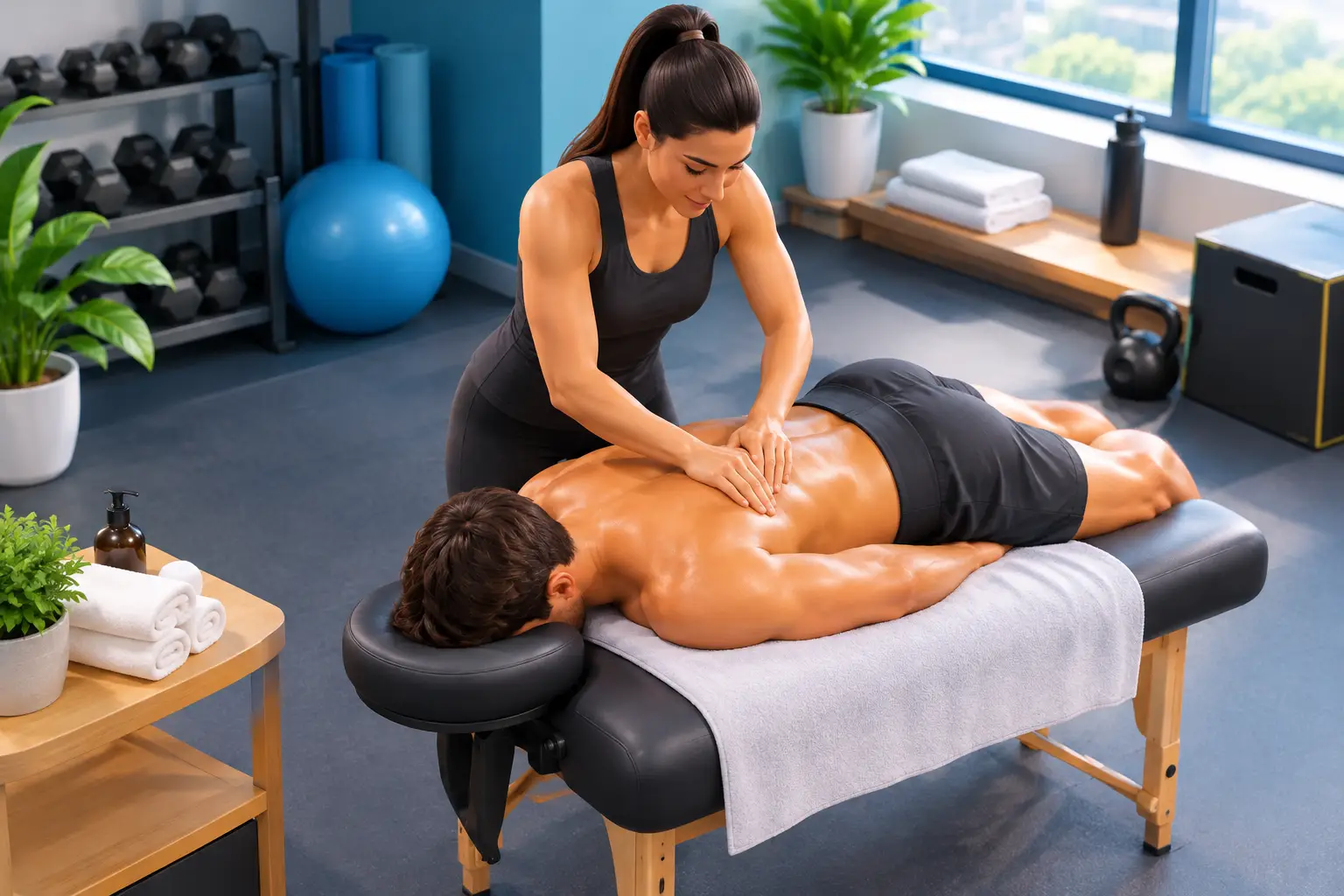
Your legs may feel fine during a workout, then turn heavy and tight when you stand up from your desk the next morning. Your shoulders may handle every set at the gym but complain when you reach for a bag or sleep on your side. That is where massage recovery between workouts can make a real difference. The goal is not to push your body harder. It is to give overworked tissue, stressed joints, and a busy nervous system a better chance to reset!
Why Massage Recovery Between Workouts Helps
Training creates a healthy kind of stress. Strength work challenges muscle fibers. Running, cycling, dance, recreational sports, and physically demanding jobs can repeat the same movement patterns hundreds of times. Your body adapts through recovery, not just effort.
Massage therapy supports that recovery by encouraging circulation, easing the feeling of muscular tightness, and helping you notice areas that are working overtime. It can also create a powerful downshift for the nervous system. When life includes deadlines, long commutes, family responsibilities, and intense workouts, many people stay in a wound-up state long after training ends. A focused session gives your body permission to let go.
That does not mean massage is a substitute for sleep, hydration, nourishing meals, smart programming, or medical care when you are injured. It works best as one part of a consistent recovery plan. Think of it as maintenance for the body you ask so much of every week.
Timing Matters More Than Most People Think
A deep, intense session immediately before a major race, competition, or personal-record attempt is not always the best choice. Some people feel pleasantly loose afterward, while others feel tender or unusually relaxed. If performance is the priority tomorrow morning, lighter work may be a better fit than a heavy deep tissue approach.
For many active adults, scheduling massage 24 to 72 hours after a demanding workout is a comfortable window. By then, you have had time to cool down and rehydrate, but you may still feel the stiffness that comes from loaded squats, hill repeats, pull-ups, tennis serves, or a long day on your feet. A session during this period can focus on the areas that are lingering without turning recovery into another exhausting event.
Your ideal schedule depends on your training volume, stress level, injury history, and goals. Someone lifting twice a week may love a monthly massage. A runner building mileage, a fitness instructor, or a person returning to exercise after a long break may benefit from more frequent bodywork for a period of time. Consistency usually matters more than intensity.
When to Choose Gentle Work
Choose Swedish massage, gentle myofascial work, calming shiatsu, or another lighter approach when you are generally sore, sleep-deprived, stressed, or new to massage. Gentle work is not a lesser service. It can be exactly what your body needs to settle down and recover well.
A lighter session can also make sense the day before an event. The purpose is to help you feel present, mobile, and comfortable, not to chase every knot in one appointment.
When Deeper Work Makes Sense
Deep tissue massage, trigger point therapy, cupping, and focused myofascial release can be useful when a specific area repeatedly feels restricted. Maybe your calves stay tight after runs, your upper back locks up from cycling posture, or your hips feel limited after long hours of sitting and training.
Deeper does not automatically mean better. Productive therapeutic work should be responsive, not a contest to see how much discomfort you can tolerate. Sharp pain, holding your breath, or leaving more aggravated than when you arrived are signs to communicate and adjust. Skilled massage meets your body where it is that day.
What a Recovery-Focused Session Can Address
A personalized session looks beyond the one sore spot. Tight hamstrings may be connected to how you load your hips. A cranky shoulder can be influenced by chest tension, upper-back mobility, workstation posture, and how you carry stress. Your massage therapist can assess the patterns you describe and choose techniques that make sense for your goals.
For athletes and fitness-minded clients, that might mean working through the feet and calves after running, addressing glute and hip tension after strength training, or giving the neck, chest, and upper back some attention after indoor cycling and computer work. Thai yoga massage may be a great fit when you want assisted stretching and movement. Thai reflexology can bring welcome attention to tired feet. Hot stones may help when generalized tension is the bigger issue.
At Life4orceTouch, recovery care is never a standardized spa routine. As a solo practice, each appointment is centered on what your body is telling us right now: your training, your daily stress, your comfort level, and the results you want to feel when you leave.
Make the Benefits Last After Your Appointment
The hours after massage are part of the recovery process. Drink water because hydration supports your normal daily function, not because you need to “flush toxins” from your body. Eat a balanced meal, especially if you trained hard that day, and give yourself time to notice how you feel.
You do not need to avoid all activity. An easy walk, gentle mobility work, or light stretching can feel wonderful after a session. But save your toughest workout for another day if the massage was especially targeted or if you feel tender. Pay attention to your response rather than following a rigid rule.
Between appointments, a few simple habits can prevent tightness from building into a bigger problem. Brief movement breaks during the workday, a gradual warm-up before exercise, enough recovery days, and changing up repetitive movement patterns all count. Massage feels even more effective when it supports a body-care routine rather than carrying the whole load alone.
Know When Massage Should Wait
Massage is valuable, but there are situations where rest, medical evaluation, or clearance from a health professional comes first. Skip treatment and seek appropriate guidance for a suspected fracture, severe swelling, fever, a new unexplained rash, signs of infection, blood clot concerns, sudden weakness, numbness, or severe pain that does not improve.
If you are managing a diagnosed condition, recovering from surgery, pregnant, taking blood-thinning medication, or working with a physical therapist or physician, share that information before your appointment. Massage can often be adapted beautifully, but good care starts with a full picture.
Let Recovery Be Part of Your Training
The best recovery plan is the one you can repeat. You do not have to earn massage by reaching a fitness milestone or waiting until you can barely turn your head. Regular therapeutic bodywork can help you stay connected to your body before minor tightness becomes the thing that sidelines your routine.
Treat your next recovery day like a real training choice. Give your muscles room to soften, give your mind a chance to settle, and let your body tell you what it needs. That is not taking time away from your goals. It is one more way to keep showing up for them!