
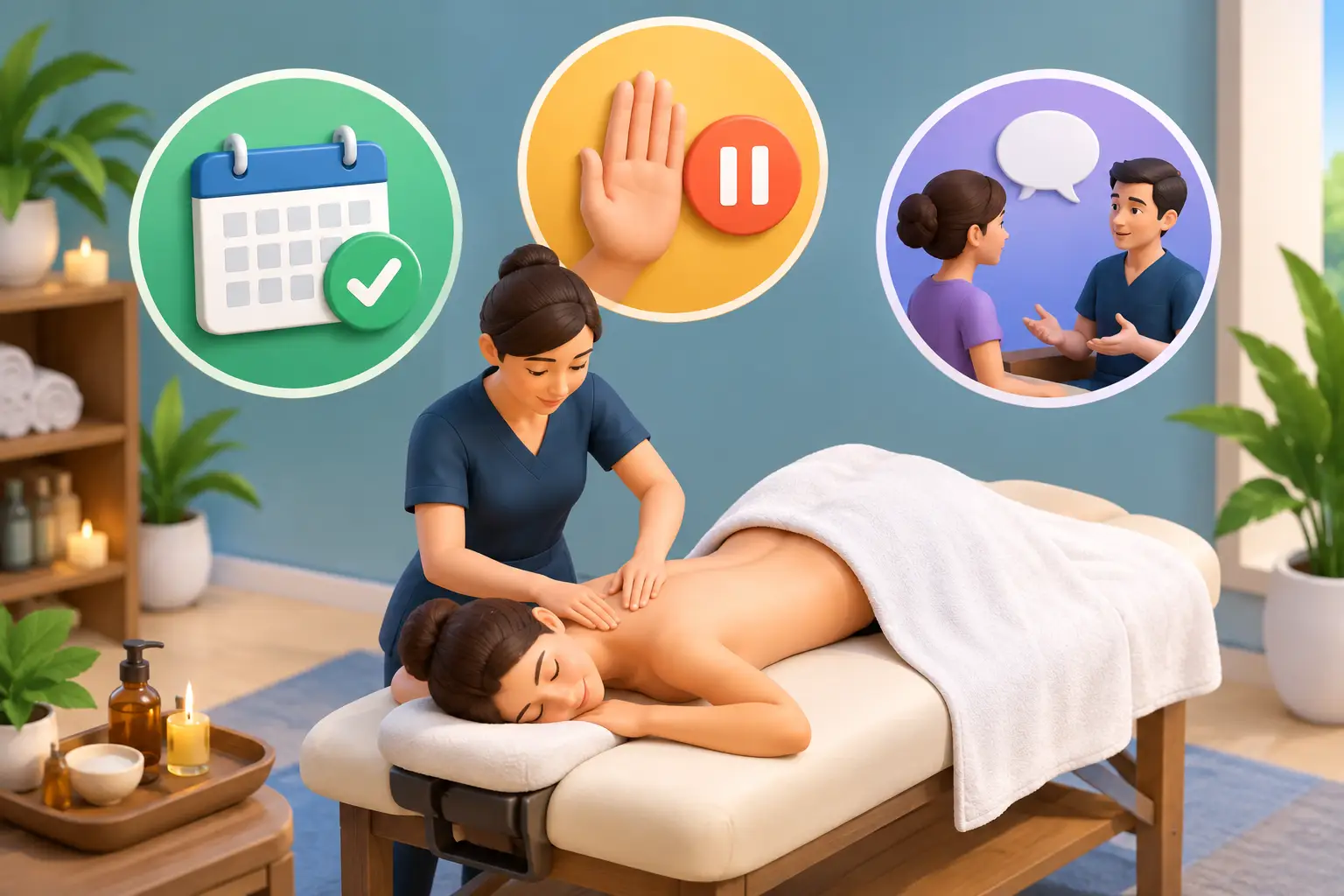
A great massage should leave you feeling cared for, clearer in your body, and better able to move through your week. Massage safety is what makes that possible. It is not about being fearful of bodywork or avoiding the pressure you need. It is about choosing the right session, sharing the right information, and working with a therapist who listens closely to what your body is saying.
For busy Philadelphians carrying work stress, training soreness, old injuries, and everyday tension, massage can be a powerful part of a wellness routine. Still, timing and communication matter. The best session for a stubborn knot may be very different from the best session when you are sick, freshly injured, dehydrated, or dealing with a new health concern.
Massage Safety Starts Before the Session
A safe, effective massage begins with a real conversation. Before hands-on work starts, your therapist should ask about your goals, areas of discomfort, health history, medications, recent procedures, injuries, and any changes since your last visit. This is not paperwork for paperwork’s sake. It helps shape the session around your needs.
Maybe you want relaxing Swedish massage after a demanding week. Maybe your hips feel restricted after running, your shoulders are locked up from desk work, or you are looking for focused deep tissue work, myofascial release, trigger point therapy, Thai yoga massage, or reflexology. Each goal calls for a different pace, pressure, and approach.
Be direct about what you want and what you do not want. You can request lighter pressure, ask to avoid an area, choose to stay fully draped, or say that a technique does not feel right. Therapeutic massage is collaborative care. You never have to “push through” discomfort to prove you can handle a session.
Share Changes, Even If They Feel Small
Tell your therapist if you have started a new medication, had an injection, received surgery or dental work, developed a rash, found a new bruise, or are feeling unusually fatigued. Mention pregnancy, varicose veins, diabetes, osteoporosis, neuropathy, a history of blood clots, cancer treatment, or conditions that affect sensation or circulation.
These details do not automatically mean you cannot receive massage. They may simply mean the session needs modification. For example, pressure may need to be lighter, a specific area may need to be avoided, or certain tools and techniques may not be appropriate that day. Cupping can leave temporary circular marks, so it may not be the right choice before an event or when bruising is already a concern. Hot stone massage may need adjustment for someone with reduced heat sensitivity.
If you are under medical care for a significant condition, ask your health care provider whether massage is appropriate and what limitations they recommend. A skilled massage therapist can work as part of your broader care team, but massage does not replace medical diagnosis or treatment.
When Massage Safety Means Waiting
There are times when a massage is exactly what your body needs, and times when rescheduling is the smart move. A responsible therapist will help you make that distinction without judgment.
Please pause and seek medical guidance before booking or continuing a massage if you have:
- Fever, vomiting, diarrhea, a contagious illness, or a new unexplained rash
- Sudden swelling, warmth, redness, or severe pain in one leg or arm
- Chest pain, shortness of breath, fainting, or a sudden severe headache
- A fresh injury with significant swelling, inability to bear weight, or suspected fracture
- An open wound, active skin infection, or a recent surgery that has not been cleared for bodywork
Those symptoms need medical attention, not a deeper massage. The same is true for unexplained numbness, weakness, sudden loss of coordination, or pain that is dramatically different from your usual muscle tension.
For less urgent situations, massage may still be possible with sensible modifications. If you are sore after a workout, a lighter recovery-focused session may feel better than aggressive deep work. If you have a mild cold but no fever and feel up to being out, communicate honestly first. If you are recovering from a procedure, wait for clearance and bring any instructions you received.
The Right Pressure Is Not a Test of Toughness
Many people believe deep tissue massage has to hurt to work. That is one of the biggest misunderstandings around massage safety. Focused pressure can create strong, productive sensations, especially in chronically tight tissue. But sharp, burning, electric, pinching, or breath-holding pain is a signal to speak up.
Useful therapeutic pressure often feels intense but manageable. You should be able to breathe normally and relax into the work. If your body braces hard against the therapist’s hands, the pressure may be too much, or the area may need a slower approach.
Deep tissue massage, trigger point therapy, and myofascial release can be incredibly helpful for persistent tension and movement restrictions. They also require patience. Sometimes the most effective session is not the one with the greatest force. It is the one that combines targeted work with calming nervous-system support, mobility-focused techniques, and enough time for your tissues to respond.
Say something in the moment. Try simple language: “That is too sharp,” “Can we ease up a little?” “I feel that traveling down my arm,” or “I need a break from that area.” Clear feedback helps your therapist do better work for you.
How to Prepare for a Safer, Better Session
Arrive hydrated and give yourself a few minutes before the appointment instead of rushing in at full speed. Eat a light meal if you need one, but avoid arriving overly full. Wear clothing you can easily change out of or move in, especially if your session includes Thai yoga massage or stretching-based work.
Avoid heavy drinking before massage. Alcohol can affect your awareness, hydration, and ability to give clear feedback about pressure. If you have taken a pain medication, muscle relaxant, or anything else that changes how you feel pain or sensation, let your therapist know.
Come with a practical goal. It can be as simple as “I want to sleep better,” “My low back feels tight after driving,” or “I need help recovering from leg day.” A goal gives your session direction without forcing your body into a rigid outcome.
What to Expect After Bodywork
After massage, you may feel calm, loose, tired, or pleasantly tender in areas that received focused work. Gentle movement, regular meals, water, and a good night’s sleep can help you enjoy the benefits. You do not need to force a hard workout immediately afterward to make the massage “count.”
Mild soreness can happen after deeper techniques, much like the feeling after unfamiliar exercise. It should be temporary and manageable. If soreness is intense, lasts more than a couple of days, or is paired with swelling, numbness, worsening pain, or other concerning symptoms, contact a medical professional.
Pay attention to patterns between visits. Does your neck tighten after long laptop days? Do your calves seize up after pickup basketball? Does stress show up first in your jaw, shoulders, or low back? Those clues help create a bodywork plan that supports prevention, not just crisis relief.
Your Comfort Is Part of the Treatment
Professional massage includes boundaries, consent, privacy, and respect. You should know what areas will be worked on, how you will be draped, and why a technique is being suggested. You can change your mind at any point. You can ask questions before, during, or after the session.
At Life4orceTouch, individualized care means meeting your body where it is that day – whether you need restorative relaxation, targeted therapeutic work, or a balanced combination of both. Your feedback is valuable information, and your comfort is never an afterthought.
The smartest way to care for your body is not to wait until tension becomes unbearable. Stay curious about how you feel, communicate openly, and choose bodywork that leaves you feeling more at home in yourself.