
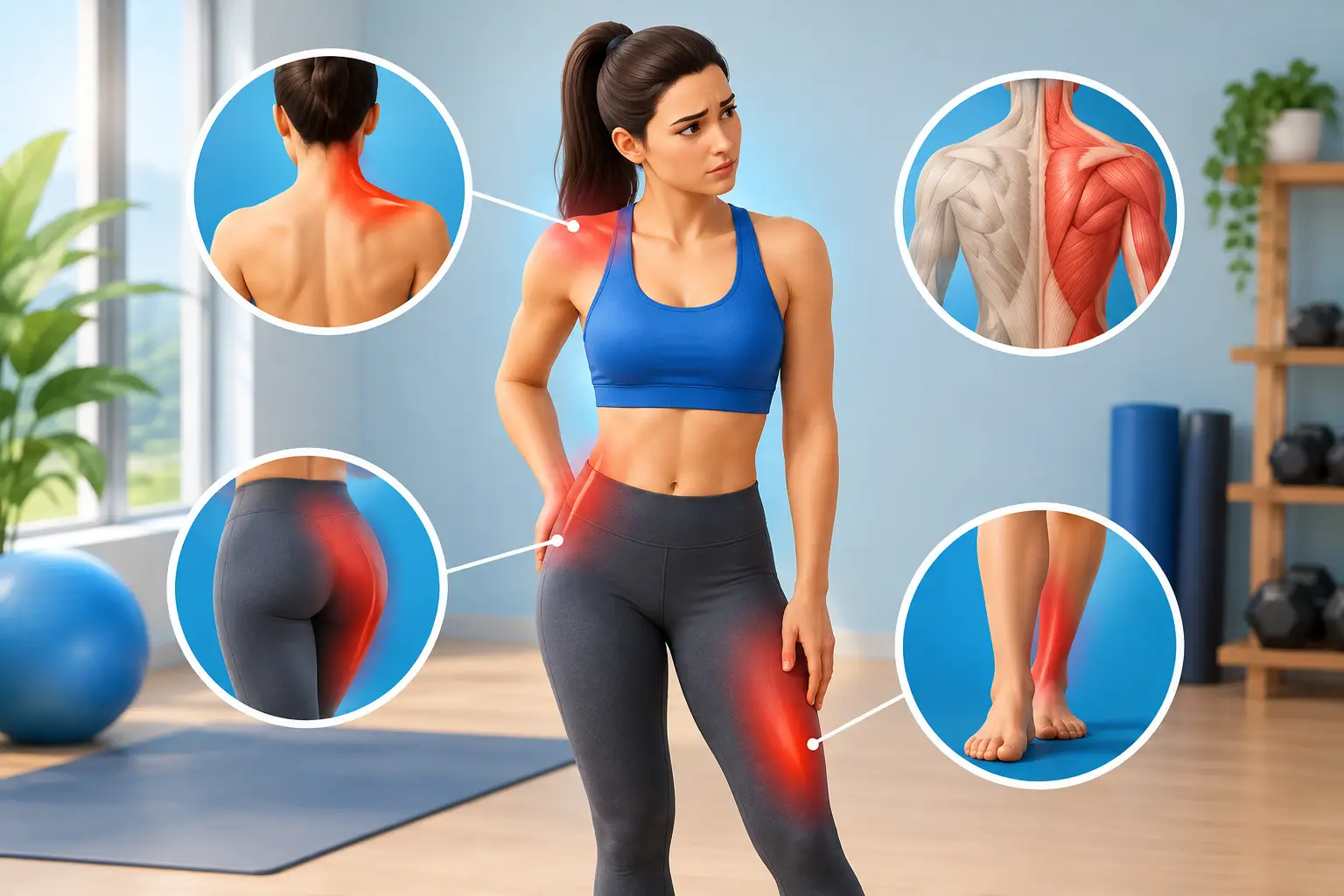
That tight hip that returns after every workout, the shoulder that always creeps toward your ear, or the knee that complains only when you take the stairs may not be random. They can be top signs of muscle imbalance: a pattern where certain muscles are overworking, shortened, or guarded while others are underused or not contributing well to movement.
Muscle imbalance is not a diagnosis, and it does not mean your body is broken. It is often your body’s practical response to how you work, train, sit, sleep, recover, and manage stress. A demanding desk job, long Philadelphia commute, old injury, new gym routine, or even carrying a toddler on the same hip every day can gradually change how you move. The good news? Once you notice the pattern, you can make smart adjustments and get support that is tailored to your body.
What Muscle Imbalance Really Means
Muscles rarely work alone. Your hips, core, shoulders, feet, and spine coordinate constantly to help you walk, reach, lift, run, and simply stay upright. When one area lacks mobility, strength, endurance, or timely activation, another area often takes over. That compensation may work for a while, but it can leave you feeling tight, sore, restricted, or uneven.
For example, a person with limited hip mobility may rotate through the low back during squats or while getting up from a chair. Someone whose upper back and shoulder-blade muscles are not doing their share may rely on the neck and upper traps to hold the shoulders up all day. The discomfort is real, but the spot that hurts is not always the only area that needs attention.
It also depends on the person. One runner may have a strength imbalance after returning from an ankle sprain. Another may primarily have a mobility issue from sitting for long stretches. A skilled assessment looks at your symptoms, daily demands, movement habits, and recovery instead of treating every tight muscle the same way.
Top Signs of Muscle Imbalance in Daily Life
One side always feels tighter or works harder
Most people have a dominant hand and a preferred side, so mild differences are normal. But pay attention when one hip, calf, shoulder, or side of your low back repeatedly feels much tighter than the other. You might always stretch one hamstring, get knots on one side of the neck, or feel one glute working while the other seems absent during exercise.
Repeated one-sided tension can mean that side is carrying more of the workload. It can also reflect an old protective pattern after an injury, even if the original injury happened years ago.
Your posture changes when you get tired
You do not need to chase a perfectly rigid posture. Bodies are meant to move. Still, fatigue can reveal useful clues. If your shoulders round forward, one shoulder rises, your head shifts to one side, or you collapse into one hip by late afternoon, your body may be relying on a familiar compensation.
Notice what happens during real life: standing in line, typing at your laptop, carrying groceries, or walking after a long workday. These moments often say more than a quick glance in the mirror.
You have recurring knots in the same places
A knot that returns between the shoulder blade and spine, at the base of the neck, around the outer hip, or in the calves is worth investigating. Trigger points and tender bands can form when tissue is overloaded, but repeatedly pressing on the painful spot may only provide short-lived relief if the movement pattern stays unchanged.
Targeted massage, myofascial release, and trigger point therapy can help calm stubborn tension and improve comfort. For lasting change, many people also benefit from movement breaks, mobility work, strengthening, or guidance from a physical therapist when appropriate.
One movement feels awkward, weaker, or less stable
Does one knee drift inward during a squat? Does one arm feel less steady overhead? Do you always push more through one foot when climbing stairs? A difference in control can be one of the clearest signs that the body is distributing force unevenly.
This does not automatically mean you need to stop exercising. It may mean you need to scale the movement, slow it down, improve technique, or build capacity gradually. Pushing hard through pain usually teaches your body to compensate more aggressively.
Pain shows up somewhere other than the source
Muscle imbalance often creates a chain reaction. Tight chest muscles and limited upper-back movement can contribute to an overworked neck. Stiff ankles can change knee mechanics. Hip restrictions can make the low back work overtime. Again, these are possibilities, not guarantees, but they explain why a full-body view matters.
If you only chase the place that hurts, you may miss the area that is driving the extra workload. Personalized bodywork considers both: the tissue asking for relief and the surrounding structures influencing how you move.
Your range of motion is different side to side
Try a simple comparison without forcing anything. Can you rotate your head equally in both directions? Reach one arm overhead as comfortably as the other? Cross one ankle over the opposite knee with far more ease? Does one heel lift during a squat before the other?
Side-to-side differences are common, especially after sports, surgery, pregnancy, or an injury. What matters is whether the difference is new, growing, painful, or affecting the things you want to do. A little asymmetry is human. Increasing limitation deserves attention.
You feel sore long after ordinary activity
Some soreness after a challenging workout is expected. But if a normal walk, light strength session, weekend yardwork, or a day at your desk leaves the same muscles exhausted for days, your load may not be distributed efficiently. The issue could be too much training volume, too little recovery, poor sleep, stress-related tension, a movement imbalance, or a mix of all of the above.
More intensity is not always the answer. Sometimes the body needs recovery, better pacing, and hands-on care that helps it settle down before asking it to do more.
Why Busy, Active Adults Miss the Pattern
Muscle imbalance tends to build quietly. You adapt to the tightness because you are busy. You keep working, training, parenting, and checking off the next task. Then a small irritation starts limiting your workouts, interrupting sleep, or making your favorite activities less enjoyable.
Stress can add another layer. When you are under pressure, breathing may become shallower and the jaw, neck, chest, hips, and hands can stay subtly braced for hours. That tension is not “all in your head.” It is a physical pattern that can change how you feel and move.
A Smarter Response Than Stretching Everything
Stretching can feel wonderful, but it is not a universal fix. A muscle that feels tight may be protecting an unstable joint, responding to overload, or compensating for weakness elsewhere. Aggressively stretching it without context can sometimes irritate the area more.
Start with observation. Track when symptoms appear, what makes them better or worse, and whether your pain follows particular movements or positions. Add small movement breaks during long sitting periods. Vary the side you carry bags on. Build exercise progressions patiently rather than jumping from little activity to an intense program.
Professional support can make this process clearer. At Life4orceTouch, individualized massage therapy may include deep tissue work, myofascial release, trigger point therapy, Thai yoga massage, or other techniques selected for your comfort, goals, and current condition. The goal is not to force your body into a preset shape. It is to reduce unnecessary tension, support more comfortable movement, and help you reconnect with what your body is telling you.
Massage works especially well as part of a broader plan. If strength, rehabilitation, or persistent movement dysfunction is involved, a physical therapist, physician, or qualified fitness professional may be the right partner too. Integrated care gives you more options, not fewer.
When to Get Medical Care First
Massage is not a substitute for medical diagnosis. Seek prompt medical evaluation for sudden severe pain, significant swelling, numbness or tingling, unexplained weakness, loss of balance, fever, chest pain, pain after a major fall or accident, or changes in bowel or bladder control. If discomfort persists, worsens, or repeatedly limits daily life, check in with a licensed medical provider.
Your body does not need punishment to become more balanced. It needs attention, appropriate challenge, and recovery. Start with the pattern you notice most often, then give yourself the kind of consistent care that makes everyday movement feel easier again.