
Your shoulders may feel welded to your ears after a long week. Your hips may complain after workouts, commuting, or hours at a desk. When you need more than a soothing rubdown, Thai yoga massage benefits can feel especially meaningful: this active, floor-based bodywork combines focused pressure, rhythmic movement, and assisted stretching to help your body feel more open, settled, and ready to move.
Thai yoga massage is not about forcing your body into impressive-looking stretches. It is a responsive, fully clothed treatment that meets you where you are. For busy Philadelphians balancing work, family, training, and everyday stress, that personalized approach matters!
What Makes Thai Yoga Massage Different?
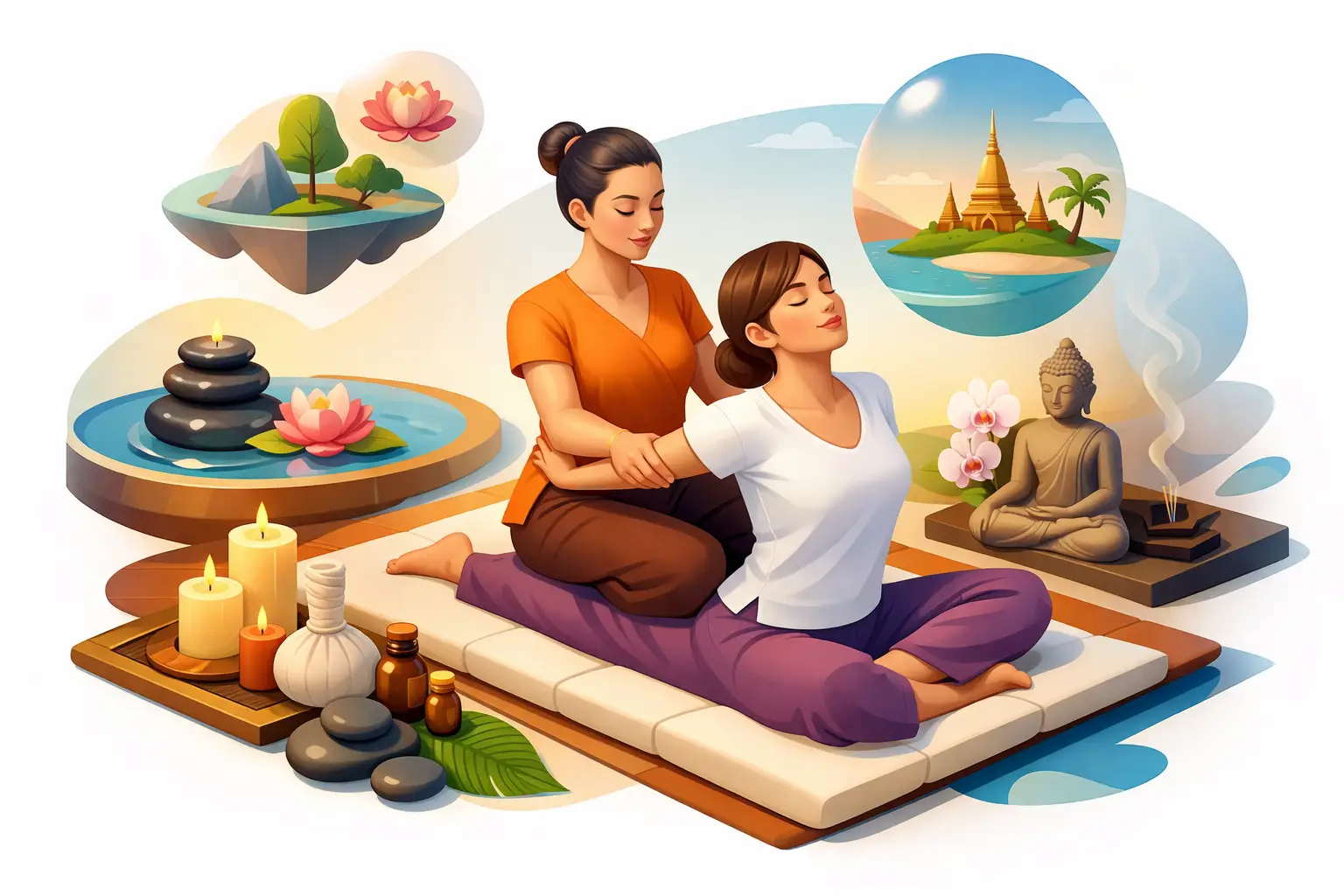
Traditional Thai yoga massage is often performed on a comfortable floor mat rather than a massage table. You wear loose, flexible clothing while your practitioner uses hands, thumbs, forearms, elbows, and sometimes feet to apply steady pressure along muscles and energy lines. They also guide your limbs through gentle, supported stretches.
Think of it as receiving a carefully tailored combination of massage, passive yoga, and mindful mobility work. You do not need to be flexible, athletic, or experienced with yoga. In fact, many people choose Thai yoga massage because their tight hips, stiff back, or overworked shoulders make solo stretching difficult or uncomfortable.
The session is collaborative. A skilled practitioner observes how your body responds, checks in about pressure and comfort, and adjusts the pace. Some clients want slow, calming movement and broad compression. Others need more attention around the glutes, hamstrings, upper back, calves, or neck. The right session is never one-size-fits-all.
Thai Yoga Massage Benefits for Everyday Movement
It can support mobility without asking you to push harder
When muscles are guarded or joints feel restricted, stretching on your own can turn into a tug-of-war. Thai yoga massage lets your practitioner support the weight of your limbs and introduce movement gradually. This can make it easier to explore a comfortable range of motion in the hips, shoulders, spine, and legs.
That does not mean one session will permanently change your flexibility. Mobility is influenced by activity level, injury history, stress, sleep, strength, and daily habits. Still, many clients leave feeling less compressed and more aware of where their body has been holding tension. That awareness can make walking, reaching, squatting, or returning to a workout feel more natural.
It offers targeted relief for hardworking muscles
Long runs, strength training, cycling, dance classes, physical jobs, and even a packed day of errands can leave the lower body feeling heavy. Thai massage uses compression and deliberate pressure to address areas that often carry the load, including the feet, calves, thighs, glutes, and low back.
For desk-bound professionals, the payoff may show up elsewhere: a freer chest, less gripping through the upper traps, and easier rotation through the neck and shoulders. The treatment can be deeply relaxing, but it is also wonderfully practical for people who want bodywork that pays attention to movement patterns instead of treating every appointment like the same spa experience.
It helps downshift a stressed nervous system
Stress does not stay politely in your thoughts. It can show up as shallow breathing, jaw tension, restless sleep, headaches, a clenched belly, or a body that feels unable to fully rest. The slow rhythm of Thai yoga massage, paired with supported movement and intentional breathing, gives many people space to settle.
This is one reason Thai massage can appeal to clients who feel touch-deprived or chronically “on.” You are not expected to perform, hold poses, or keep up with a class. You simply receive care. Some people feel energized afterward; others feel quiet and sleepy. Both responses can be normal, especially when your body has finally had permission to let go.
It can complement an active recovery routine
Recovery is more than collapsing on the couch after a tough workout. Your body may benefit from hydration, adequate food, sleep, strength work, easy movement, and appropriate rest. Thai yoga massage can fit into that bigger picture by helping you reconnect with areas that feel overused, stiff, or neglected.
If you are training for an event or returning to activity after time away, timing matters. A very intense session immediately before a major competition may not be the best choice for everyone. Tell your practitioner what you are preparing for, what feels sore, and how your body usually responds to massage. A lighter, movement-focused session may be more appropriate than deep, lingering pressure.
It encourages a fuller-body perspective
A tight hamstring may be related to how you sit, train, recover, or move through your hips and low back. An achy shoulder may be influenced by posture, workload, chest tension, or the way you breathe under pressure. Thai yoga massage does not diagnose medical conditions, but its whole-body approach can make these connections easier to notice.
That broader view is valuable. Instead of chasing one painful spot with more and more pressure, your practitioner can work with the surrounding tissues and movement patterns. Sometimes the most useful work for a sore neck begins in the upper back, chest, or arms. Sometimes tired feet need attention before the legs and hips can relax.
Who May Enjoy Thai Yoga Massage Most?
Thai yoga massage is a strong match for active adults who feel stiff after training, professionals who spend long hours seated, and anyone craving a more movement-oriented massage experience. It can also be an inviting option for massage newcomers who are nervous about oil massage or prefer to remain clothed.
It is not automatically the right choice every time. If you have a recent injury, uncontrolled high blood pressure, severe osteoporosis, a joint replacement, blood-clot concerns, pregnancy, surgery recovery, or a condition affecting sensation or circulation, speak with your health care provider and tell your massage therapist before booking. A knowledgeable practitioner may modify the session, recommend another modality, or suggest waiting until it is appropriate.
Clear communication makes a difference. You can always ask for less pressure, smaller stretches, extra bolstering, or more work in a particular area. Therapeutic bodywork should feel productive and safe, not like something you have to endure.
What to Expect at Your Appointment
Arrive in clean, comfortable clothing that allows you to bend your knees and move easily. Athletic wear, soft pants, and a T-shirt are usually ideal. Avoid a very heavy meal immediately beforehand, and give yourself a little extra time afterward if possible. You may want water, a nourishing meal, and a lighter evening after a deeply restorative session.
Your practitioner should begin by asking about your goals, health history, activity level, and areas of concern. During the massage, you may experience rocking, rhythmic compression, gentle traction, and assisted stretches. The work can range from very soothing to more focused, depending on your needs and preferences.
At Life4orceTouch, Thai yoga massage can be part of a personalized care plan rather than a stand-alone novelty. If your body needs more targeted muscular work, your session may be informed by therapeutic approaches such as deep tissue massage, myofascial release, trigger point therapy, or reflexology. The goal is simple: care that responds to your actual body, not a preset routine!
Help the Benefits Last Between Sessions
The best aftercare is usually uncomplicated. Notice how you feel over the next day or two. A short walk, gentle mobility, regular hydration, and a good night of sleep can help you stay connected to the ease you felt on the mat. If a particular stretch felt helpful, ask your practitioner whether a simple version is appropriate to practice at home.
Consistency is often more useful than occasional intensity. Someone managing ongoing stiffness may benefit from regular bodywork and small daily movement breaks, while another client may only need a Thai yoga massage after a demanding training block or stressful season. Your schedule, goals, and body all deserve a say.
Give yourself permission to choose care that helps you feel at home in your body. Whether you are recovering from a hard week, preparing for your next workout, or simply ready to breathe deeper and move with less effort, a thoughtful Thai yoga massage session can be a powerful reset!