Your feet may carry you through a long shift, a SEPTA commute, a workout, and every errand in between – then ask for nothing but a thin pair of socks and a few hours of sleep. When soreness becomes part of the routine, Thai reflexology for foot pain offers a focused, hands-on way to give hardworking feet real attention.
This is not a quick lotion-and-polish foot treatment. Thai reflexology is a therapeutic bodywork approach that uses deliberate pressure, stretching, compression, and massage techniques on the feet and often the lower legs. For people dealing with everyday aching, tightness, fatigue, or the dull heaviness that builds after being on their feet, it can feel deeply restorative.
At the same time, foot pain has many possible causes. A thoughtful session can support comfort and relaxation, but it is not a substitute for medical evaluation when pain is severe, sudden, persistent, or tied to an injury. The best results come from matching the work to what your body actually needs.
What Thai Reflexology for Foot Pain Involves
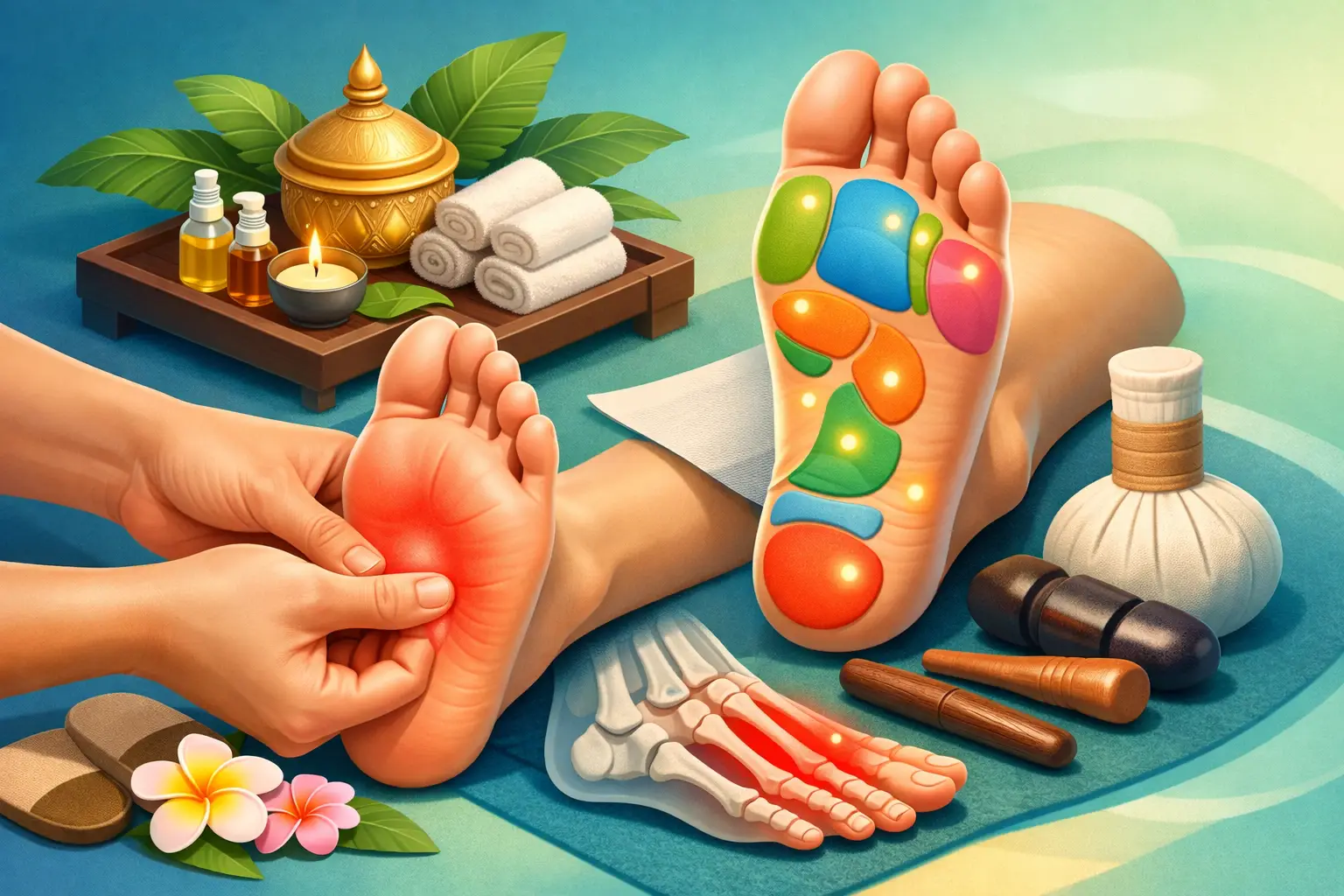
Traditional Thai reflexology is based on the idea that specific areas of the feet correspond with other areas of the body. A practitioner works these reflex points with thumbs, fingers, palms, and sometimes a smooth wooden reflexology tool. The goal is to encourage relaxation, improve the feeling of circulation, and relieve tension held in the feet and lower legs.
The experience can be more active and specific than a standard foot rub. Pressure may be slow and sustained on tender areas, followed by kneading across the sole, heel, arch, toes, ankle, and calves. Gentle ankle rotations and toe movements may also be included when appropriate.
For many clients, the immediate benefit is simple: their feet feel lighter, warmer, and less clenched. That matters. When your feet are constantly bracing inside work shoes, running shoes, boots, or dress shoes, the muscles and connective tissue can stay switched on long after you sit down.
Pressure should feel purposeful, not punishing
Thai reflexology can be intense in spots, especially when the arches, heels, or calf muscles are very tight. Intensity does not have to mean pain. Productive pressure may feel like a tender “good hurt” that eases as you breathe, but sharp, burning, electric, or overwhelming pain is a signal to speak up right away.
A skilled practitioner adjusts pressure based on your sensitivity, health history, activity level, and goals for the session. Some clients want deep, targeted work after a demanding week of training. Others need a calming, moderate-pressure session because their feet are already irritated or because stress has them feeling physically guarded. Personalized care is the difference!
When Foot Pain May Respond Well
Thai reflexology is often a welcome option for non-emergency foot discomfort connected to overuse, muscle tension, and daily strain. If you stand at work, walk a lot around Philadelphia, exercise regularly, or simply feel like your feet never fully recover, focused bodywork may help you relax the tissues that have been doing too much.
It can be especially useful when foot discomfort comes with tight calves and ankles. The bottom of the foot does not work in isolation. Calf tension can limit ankle movement, alter how you walk, and leave the feet working harder with every step. Addressing both the feet and lower legs can create a more complete sense of relief than working on the sole alone.
People commonly seek foot-focused bodywork for aching after long periods of standing, general arch tightness, tired feet after travel, post-workout soreness, and tension from restrictive footwear. It may also be a supportive part of a wider self-care plan for people with recurring plantar fascia irritation, as long as the work is modified for their symptoms and coordinated with appropriate clinical care when needed.
That last part matters. Plantar fasciitis, heel pain, nerve irritation, stress fractures, arthritis, tendon injuries, and circulation concerns can feel similar at first. Reflexology does not diagnose the source of your pain, reset a broken bone, or replace a podiatrist, physical therapist, or physician. It can, however, be one valuable piece of an integrated approach to feeling and moving better.
What to Tell Your Practitioner Before Your Session
Your first few minutes of conversation are part of the treatment. Be specific about where the pain sits: under the heel, through the arch, across the ball of the foot, around the ankle, or between the toes. Share whether it is worse in the morning, after exercise, during work, or at rest.
Also mention recent injuries, surgeries, numbness, tingling, swelling, skin sensitivity, diabetes, neuropathy, circulation conditions, blood-clot history, and medications that affect bleeding or sensation. These details help the practitioner choose techniques and pressure that make sense for you.
You do not need the perfect medical vocabulary. A clear description such as “my heel hurts on the first steps out of bed” or “my feet burn after an eight-hour shift” is useful information. The goal is never to force your body through a generic routine. It is to make an informed choice about what feels supportive that day.
When to pause and seek medical care first
Skip bodywork and contact a medical professional promptly for sudden inability to bear weight, a visible deformity, major swelling, a suspected fracture, an open wound, fever, redness with heat, or new numbness and weakness. Those symptoms call for assessment, not deeper pressure.
If you have diabetes, peripheral neuropathy, vascular disease, or reduced sensation in your feet, reflexology may still be possible, but it requires extra caution and, in some cases, guidance from your healthcare provider. Never assume that a lack of pain means a lack of injury when sensation is reduced.
Getting More From a Reflexology Session
A session works best when it is part of how you care for your body between appointments, not the only thing you do after weeks of ignoring pain. Wear shoes that fit your actual foot shape, not just the size printed on the box. Give your feet recovery time after high-impact activity. If your calves are tight, gentle mobility work and hydration can help you hold onto that post-session ease.
Avoid scheduling your first deep session right before a race, a major hike, or a day when you will be standing for twelve hours. Your feet may feel fantastic afterward, but targeted work can also leave tender tissues temporarily sensitive. Give yourself some room to notice how your body responds.
Consistency can be more helpful than waiting until discomfort is at its worst. A client who walks, lifts, runs, dances, or works on their feet may benefit from periodic maintenance, while someone with a flare-up may need a gentler session and a more careful plan. There is no one schedule that fits every body.
At Life4orceTouch, Thai reflexology can be blended with therapeutic massage, trigger point work, myofascial release, or Thai yoga massage when the feet are only one part of the pattern. Tight hips, calves, and hamstrings can all influence how your feet absorb impact. That broader view is why individualized bodywork can feel so different from a standard spa service.
A Small Reset for the Feet That Do So Much
Foot pain can make everyday life feel smaller. It can change the way you exercise, limit how far you walk, and drain your energy before the day is over. Giving your feet skilled, focused attention is not an indulgence when they are carrying the load – it is practical maintenance for the life you want to keep moving through.
If your feet are tired of being an afterthought, choose care that listens to the whole story: your work, your movement, your stress, and your goals. A personalized Thai reflexology session can be a powerful place to begin feeling more grounded, more comfortable, and ready for your next step!