
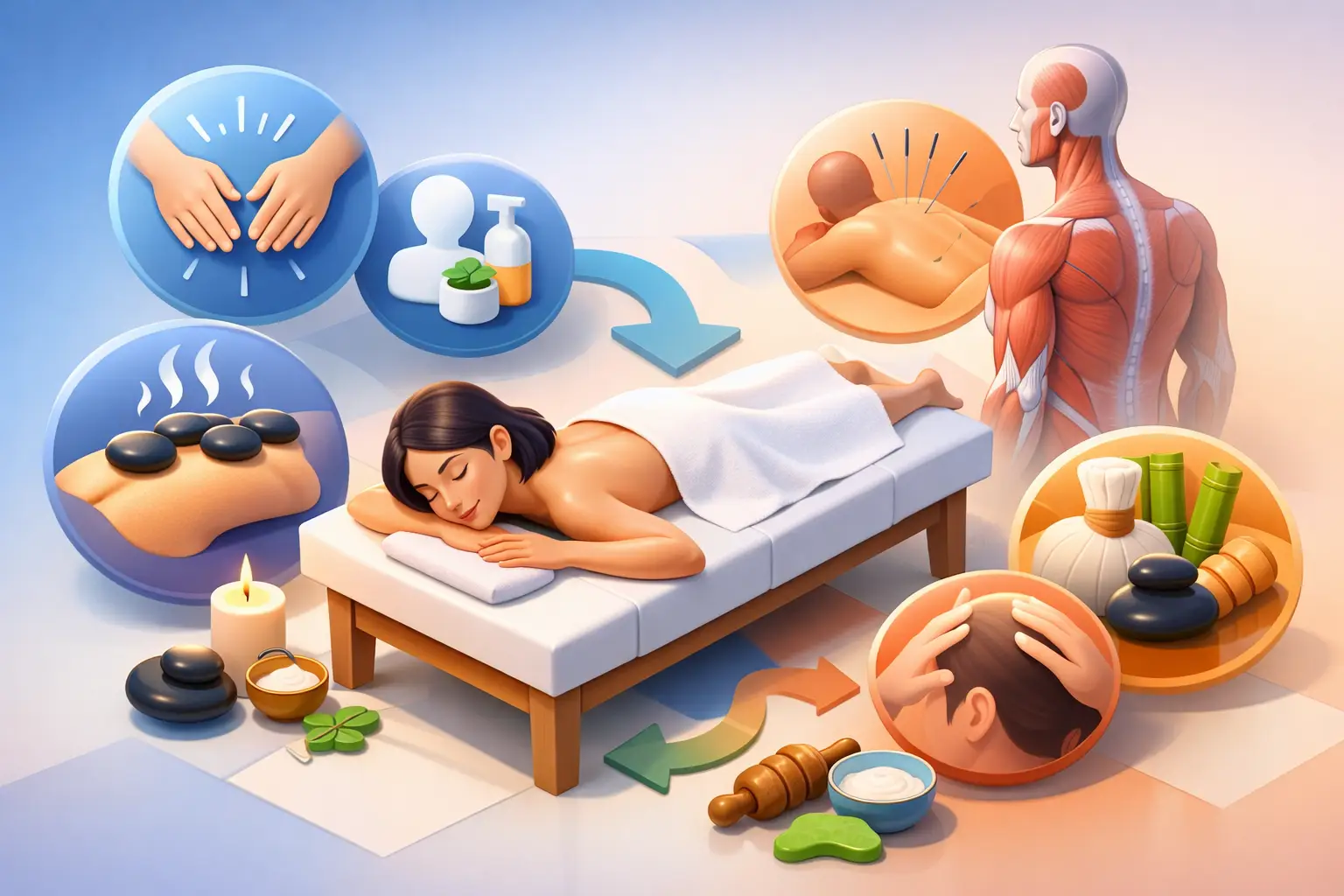
That tight spot between your shoulder blades may not need the same care as sore quads after a long run, a stress-heavy workweek, or a body that simply has not been touched with intention in too long. Knowing how to choose massage modality starts with getting clear about what your body is asking for right now – not choosing the treatment with the toughest-sounding name.
Massage is not one-size-fits-all. Some sessions are designed to settle your nervous system and help you exhale. Others focus on stubborn muscle tension, restricted movement, recovery, or the tender places that keep returning no matter how much you stretch. The right approach can also combine techniques, because real bodies rarely arrive with one neat, simple issue!
Start With Your Goal, Not the Modality Name
Before selecting Swedish, deep tissue, cupping, Thai yoga massage, or another style, ask yourself one direct question: what would make this session feel successful?
If your answer is, “I need to relax and stop carrying the entire week in my shoulders,” a calming full-body session may be your best starting point. If your answer is, “My hip keeps feeling stuck when I squat,” you may benefit from more focused therapeutic work. If you are training, returning to movement, or dealing with repetitive work posture, the goal may be recovery and mobility rather than pure relaxation.
You do not need to diagnose yourself. In fact, self-diagnosing often leads people to request the most intense work when their system would respond better to gradual, specific treatment. A skilled massage therapist can listen to your goals, assess areas of tension and restriction through touch and movement, then tailor the session accordingly.
How to Choose Massage Modality by What You Feel
Pain, tightness, fatigue, stress, and stiffness can overlap, but they do not always call for the same pressure or technique. Use your symptoms as useful information, not as a reason to push through discomfort.
When stress and overload are the main issue
Swedish massage is an excellent choice when your body feels wound up, your sleep has been off, or you want to release general tension without turning the appointment into an endurance test. Long, flowing strokes and moderate pressure can help you settle into the table, reconnect with your breathing, and leave feeling refreshed instead of depleted.
Hot stone massage can be a beautiful option for clients who enjoy warmth and tend to hold broad, diffuse tension through the back, shoulders, hands, or legs. Heat can make muscles feel more receptive to massage, though it may not be appropriate if you have certain health conditions or heat sensitivity. Say so before the session.
Shiatsu, Reiki, and craniosacral bodywork may appeal to clients who want gentler, restorative care. These sessions can be especially valuable when you feel physically and mentally overextended, touch-starved, or sensitive to deep pressure. Gentle does not mean ineffective. Sometimes the body needs safety and stillness before it is ready to let go.
When muscles feel dense, sore, or stuck
Deep tissue massage is often the first modality people request for chronic tightness. It can be helpful for persistent tension patterns in areas such as the neck, shoulders, low back, hips, and legs. But deep tissue does not mean painful tissue. The most productive pressure is controlled, targeted, and adjusted to your response.
Trigger point therapy may be useful when you can point to a particular knot or tender spot that seems to refer discomfort elsewhere. For example, shoulder tension may contribute to head or neck discomfort, while glute and hip tension may affect how the lower back feels. This work can be intense in short intervals, so communication matters. A therapist should check in, not simply press harder.
Myofascial release is often a smart choice when you feel restricted rather than merely sore. Fascia is connective tissue that surrounds and links muscles and other structures throughout the body. Slow, sustained techniques can help address the sensation of pulling, limited range of motion, or a body part that does not seem to move freely. Results may be subtle during the session but noticeable when you stand, walk, or move afterward.
When mobility and athletic recovery matter most
Active adults, gym-goers, runners, cyclists, dancers, and people returning to exercise often need a session that balances recovery with movement. Thai yoga massage combines assisted stretching, rhythmic compression, and bodywork to support flexibility, joint mobility, and overall ease of movement. It is a great fit for people who like stretching but cannot quite reach the angles their body needs alone.
Cupping may be incorporated when areas feel congested, overworked, or bound down. The suction created by cups can offer a different sensation than hands-on pressure and may be useful as part of a broader therapeutic session. Cupping can leave temporary circular marks, so plan accordingly if you have an event, photo shoot, or beach day immediately afterward.
For lower-leg fatigue, foot discomfort, or anyone who spends long hours standing, Thai reflexology can bring focused attention to feet and lower legs. It is not a replacement for medical evaluation of persistent foot pain, but it can feel wonderfully grounding and supportive for hardworking feet.
Pressure Is a Preference, Not a Trophy
One of the biggest mistakes people make is equating a good massage with high pain tolerance. “No pain, no gain” is not a bodywork strategy. If you brace, hold your breath, clench your jaw, or feel yourself mentally checking out, the pressure may be too much.
At the same time, relaxation massage and therapeutic massage are not opposites. A session can be deeply relaxing while still addressing meaningful tension. It can also include focused work without leaving you sore for three days. Your ideal pressure may change from one body area to another and from one appointment to the next.
Tell your therapist whether you prefer lighter, medium, firm, or deeper pressure. Then keep communicating. The right pressure should feel productive and manageable, never like something you have to survive.
Consider Timing, Health History, and Your Recovery Window
The best modality also depends on what is happening around your appointment. If you have a major workout, competition, long flight, or physically demanding shift tomorrow, an aggressive session may not be the ideal choice. You may be better served by focused recovery work, mobility support, or a calming treatment that helps your body recharge.
Be open about recent injuries, surgeries, medications, pregnancy, blood clotting concerns, neuropathy, varicose veins, skin conditions, fever, unexplained swelling, or ongoing medical treatment. This information is not an obstacle to care. It helps your therapist choose techniques responsibly, modify the session, or recommend that you check with your health care provider first.
Massage therapy can be a powerful part of an integrated wellness plan, but it does not replace medical care for severe pain, sudden weakness, numbness, chest pain, unexplained symptoms, or a suspected injury. When something feels alarming or new, get it evaluated.
Choose a Therapist Who Can Adapt
A long menu of modalities only matters when the therapist knows how and when to use them. Look for someone who asks about your goals, listens to what has and has not worked before, and treats your feedback as part of the session. You should not have to know the exact technique before you arrive.
At Life4orceTouch, care is built around that individualized conversation. One appointment may blend Swedish massage with targeted deep tissue work. Another may include myofascial release, trigger point therapy, assisted stretching, or cupping based on what your body presents that day. The goal is not to perform every modality. The goal is to give your body the care it needs.
Consistency also changes the answer. A single massage can offer welcome relief, but recurring tension patterns often respond best to a thoughtful plan. Your first session may focus on calming symptoms and learning your body’s patterns. Later sessions can support mobility, maintenance, stress management, and the routines that help you stay ahead of discomfort.
Let Your Body Have a Say
The modality you choose is a starting point, not a permanent label. Try a session, notice how you feel that evening and the next day, and share that feedback at your next appointment. Did you sleep better? Move more easily? Feel tender in a useful way, or overly sore? Did the relief last, and where did tension return first?
Your body is giving you useful information all the time. Bring that information into the treatment room, stay curious, and choose care that leaves you feeling more at home in yourself.