
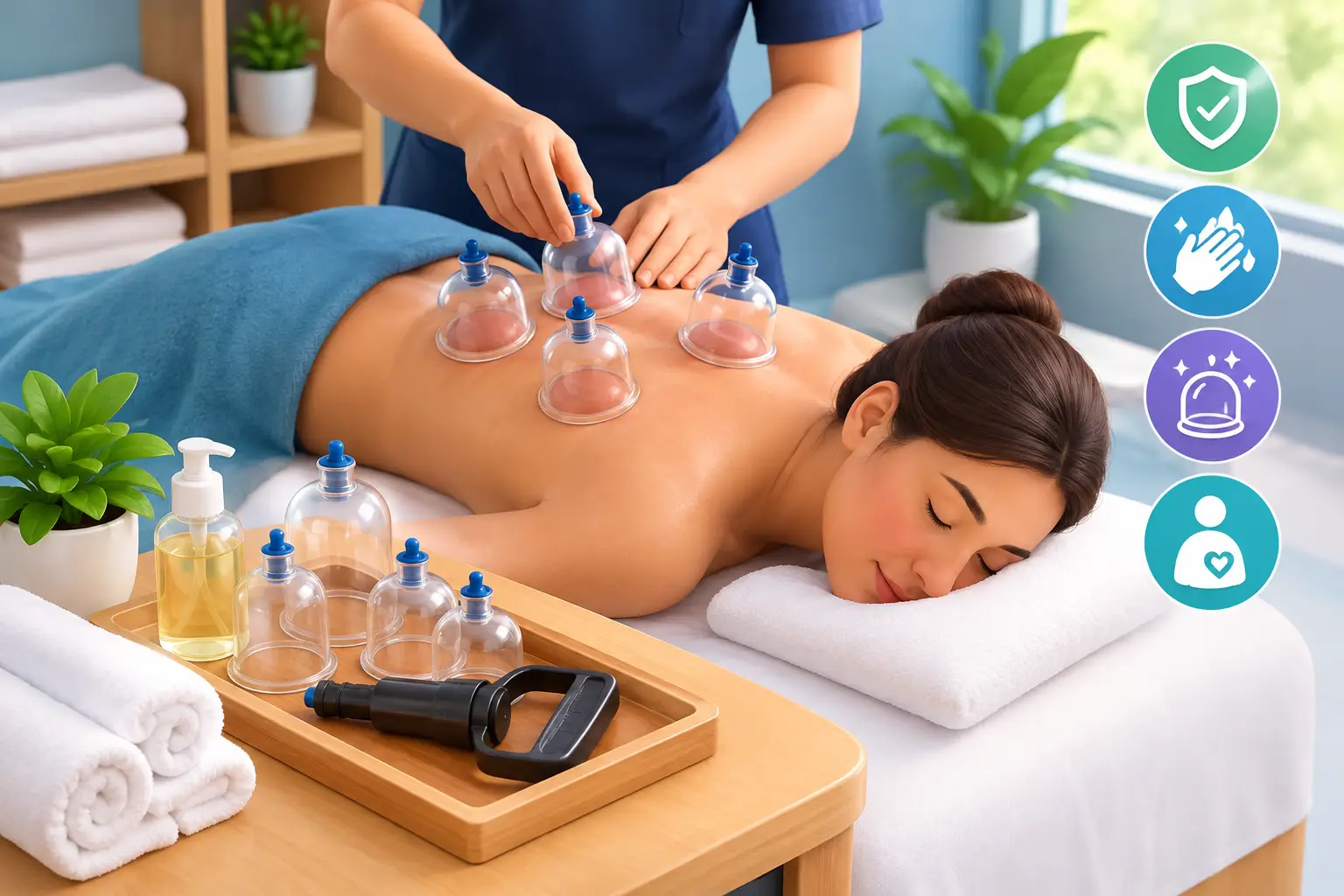
Those round cupping marks can look dramatic, especially before a wedding, beach weekend, or big meeting. They are also one reason people ask about cupping therapy safety before booking. The good news: dry cupping can be a comfortable, useful addition to massage and bodywork when it is applied thoughtfully, hygienically, and for the right person. The key is not chasing the darkest marks. It is receiving individualized care that respects your body, health history, and goals!
What safe cupping therapy looks like
Cupping uses suction to gently lift skin and superficial tissue. In a massage setting, a therapist may place silicone or plastic cups in one area for a short time, or glide them with lotion over tight muscles. Many clients enjoy it for the upper back, shoulders, hips, calves, and other areas that feel restricted from workouts, desk work, stress, or repetitive movement.
Safe care begins before a cup touches your skin. A qualified practitioner asks about your health history, medications, current symptoms, skin sensitivity, and what you hope to get from the session. They explain what the sensation may feel like, check in about pressure, and adjust their approach if something feels sharp, pinchy, numb, or simply too intense.
Cupping is not a test of toughness. More suction is not automatically more therapeutic. For some clients, light moving cupping paired with Swedish massage, myofascial work, or targeted deep tissue work is plenty. For others, cups may not be the best choice that day. Great bodywork responds to the body in front of us, not a one-size-fits-all routine.
Clean technique matters
For dry cupping, cups should be properly cleaned and disinfected between clients according to the material and manufacturer guidance. Your therapist should begin with clean hands and should not apply cups over compromised skin. If a technique breaks the skin, it carries a different level of infection and bloodborne-pathogen risk.
At Life4orceTouch, cupping is approached as a personalized bodywork modality, not a shortcut or a spectacle. Your comfort, clear communication, and an appropriate treatment plan come first.
Are cupping marks normal?
Yes, temporary circular discoloration is common after stationary cupping. The marks may range from light pink to red, purple, or deeper brown tones depending on suction, tissue sensitivity, circulation, and skin tone. They are not proof that “toxins” have been pulled from the body. That claim is not supported by good evidence.
The marks can look similar to bruises, but they are not always the same as an injury from a hard impact. Cupping changes pressure in the tissue and can leave visible color changes. Mild tenderness may occur, much like the feeling after a focused massage or a challenging workout. Marks usually fade over several days to about two weeks, though timing varies.
Tell your therapist if you have an upcoming event where visible marks would be inconvenient. Moving cupping, lighter suction, or a different massage approach may help you pursue relief without prominent circles. Also speak up immediately if the area feels painful rather than merely intense. Cupping should never leave blisters, broken skin, or distressing pain.
Who should postpone or skip cupping?
A safety screening is not paperwork for paperwork’s sake. It helps determine whether cupping is appropriate, where it can be used, and how much pressure is reasonable. Avoid placing cups over open wounds, rashes, active skin infections, sunburn, fresh scars, unexplained lumps, or areas that are hot, swollen, or acutely inflamed.
Cupping also deserves extra caution, modification, or medical clearance in several situations. This includes taking blood thinners or having a bleeding or clotting disorder; having fragile skin, severe varicose veins, reduced sensation, or poorly controlled diabetes; and having a history of blood clots or symptoms that could suggest one. Never cup directly over a suspected deep vein thrombosis. New one-sided leg swelling, warmth, redness, or pain needs prompt medical evaluation, not massage.
If you are pregnant, tell your therapist before the session. Prenatal bodywork can be deeply supportive, but positioning, pressure, and areas of application must be considered carefully. Cupping over the abdomen and certain areas of the lower back is generally avoided. A therapist trained in prenatal massage can help determine a more appropriate approach.
Recent surgery, acute injury, fever, active cancer treatment, autoimmune flare-ups, serious cardiovascular conditions, and uncontrolled medical concerns also call for a pause and a conversation with your health care team. This does not mean bodywork is permanently off the table. It means timing and coordination matter. Massage therapy can complement medical care, but it does not replace diagnosis or treatment.
Dry cupping and wet cupping are not the same
When people search for cupping, they may be referring to different practices. Dry cupping uses suction on intact skin. Wet cupping involves intentionally making small breaks in the skin and drawing blood. Because wet cupping introduces risks such as infection, bleeding, and bloodborne disease exposure, it requires strict clinical-level hygiene and training.
Ask exactly which technique is being offered. If you are booking massage-based cupping for muscular tension, you should expect dry cupping on intact skin, along with a clear explanation of the plan.
Cupping therapy safety after your appointment
Most clients can return to normal daily activities after dry cupping, but give your body a little kindness. Drink water because hydration supports normal recovery, not because you need to flush anything out. Gentle movement can feel good, especially if you came in stiff from training or sitting. If an area feels tender, skip aggressive self-massage and high-intensity exercise until it settles.
For the rest of the day, avoid very hot baths, saunas, and direct sun on marked areas if your skin feels sensitive. Wear loose, comfortable clothing so the skin is not rubbed raw. Keep any cupping marks clean and avoid scratching them.
Contact a health care professional promptly if you develop blistering, increasing redness or warmth, drainage, fever, severe or worsening pain, significant swelling, dizziness that does not pass, or any sign of an allergic skin reaction. These outcomes are uncommon with appropriate dry cupping, but they should not be ignored.
Questions to ask before booking
A trustworthy therapist welcomes questions. Ask whether they use dry or wet cupping, how they sanitize their cups, how they decide on suction level, and what health conditions may require modification. Let them know about medications, surgeries, pregnancy, allergies, skin changes, and any symptoms you have not had evaluated.
It is equally helpful to share your real goal. Are your shoulders tight after long shifts? Is your hip mobility limited after running? Are you looking for relaxation, recovery, or focused work around a stubborn area? Cupping may be one piece of a session, but it should serve that goal rather than take over the appointment because it is trendy.
Evidence for cupping is still developing. Some people report short-term relief of muscular discomfort and a satisfying sense of mobility after treatment, while others prefer hands-on massage, stretching, Thai yoga massage, or myofascial techniques. Your response can be individual, and that is okay. Safe, effective care leaves room to reassess.
Your body deserves care that feels both invigorating and sensible. Choose a practitioner who screens carefully, keeps technique clean, honors your boundaries, and is just as comfortable recommending a different approach when cupping is not the right fit. That is how a restorative session becomes support you can actually trust!