You stand up after a long day at your desk and your neck will not turn easily. Or you finish a tough workout, then wake up feeling like your calves, hips, or low back have shrunk overnight. If you have asked, “why do muscles feel tight?” you are not imagining it. That pulling, stiff, restricted feeling is real, but it does not always mean the muscle itself is short or damaged.
Muscle tightness is often your body’s protective response to load, stress, unfamiliar movement, poor recovery, or irritation in nearby tissues. Sometimes it passes with rest and gentle movement. Sometimes it keeps returning because your body needs more than a quick stretch. Knowing the difference can help you choose care that actually feels good and supports better movement!
Why Do Muscles Feel Tight in the First Place?
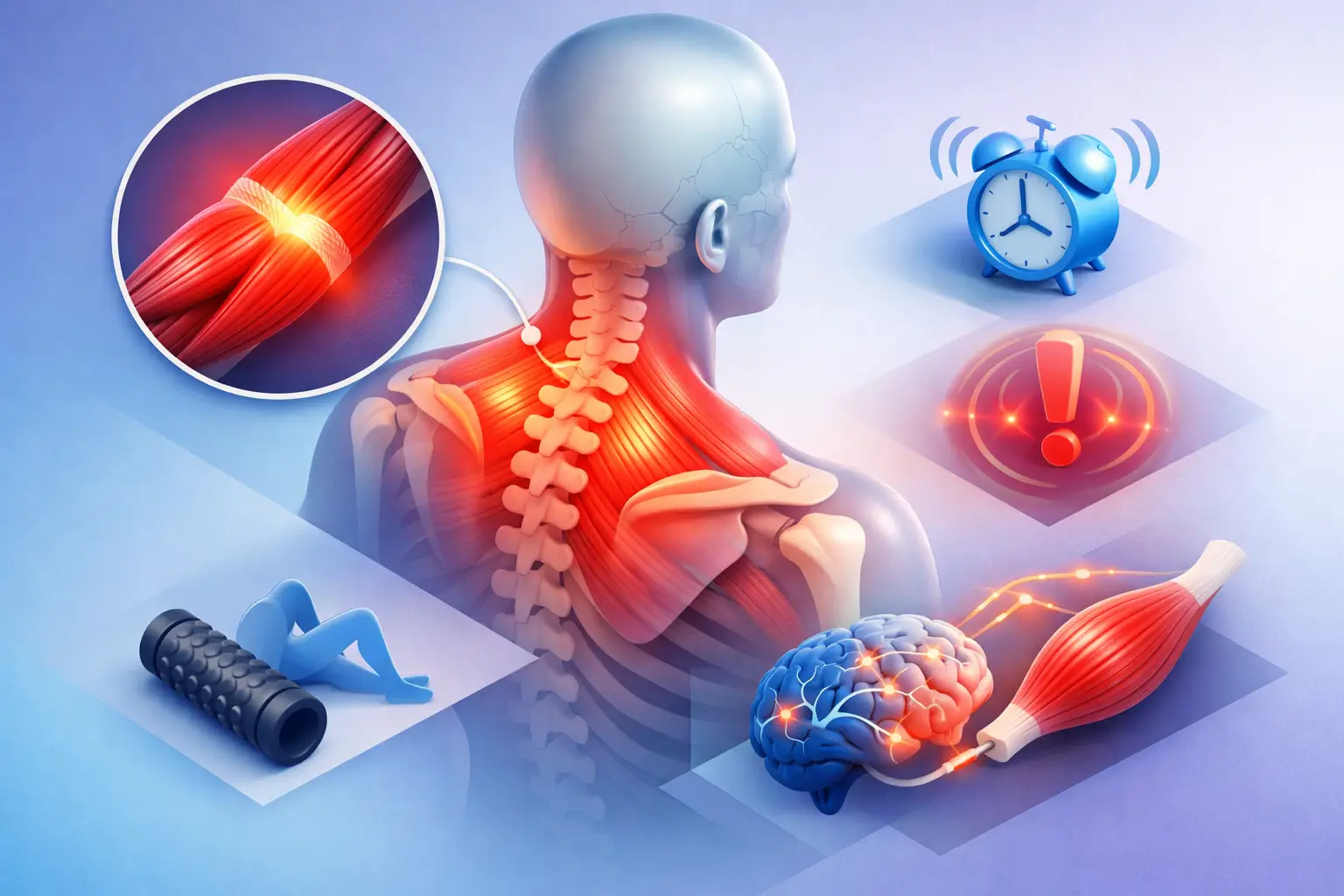
A muscle can feel tight when its nervous system is increasing tone, meaning the muscle is held in a more guarded state. Think of it as your body turning up the volume on protection. That may happen after lifting, running, sitting for hours, sleeping in an awkward position, or dealing with a stressful week.
Tightness may also come from the connective tissue around and between muscles, often called fascia. Fascia helps tissues glide as you move. When movement is repetitive, limited, or painful, that glide can feel restricted. The sensation may be a dense band in the shoulder, a pulling line through the hip, or a stubborn spot between the shoulder blades.
There is an important trade-off here: forcefully trying to “release” every tight feeling can make an already protective body guard harder. The goal is not to punish the tissue. It is to give your body enough comfort, circulation, movement, and recovery that it no longer has to brace so much.
The Most Common Reasons You Feel Tight
You have done more than your body is used to
A new strength routine, a longer walk, a weekend of moving furniture, or returning to the gym after time away can create soreness and stiffness. Delayed onset muscle soreness commonly builds 12 to 24 hours after activity and may peak over the next day or two. It is especially common after activities that emphasize controlled lowering, such as downhill walking, squats, or lunges.
That stiffness is part of a normal recovery process for many people. Gentle walking, comfortable range-of-motion work, sleep, fluids, nourishing meals, and appropriate rest can help. Trying to crush an intense workout on top of sharp soreness, however, may prolong the problem.
Your workday has you holding one position
The body tends to dislike one position for too long, even a posture that looks “perfect.” Laptop work can leave the chest, neck, forearms, and upper back feeling locked up. Long drives can make the hip flexors, glutes, calves, and low back feel stiff. Standing all day brings its own load to the feet, legs, and shoulders.
The answer is usually not to chase a flawless posture. Change positions often. Take short movement breaks, roll your shoulders, walk to refill your water, and let your joints experience more than one shape during the day. A few minutes of regular movement can be more useful than one heroic stretch at night.
Stress is showing up in your body
You may recognize this one immediately: jaw clenching, shoulders creeping toward your ears, a tight chest, shallow breathing, or a low back that seems to grip harder during a demanding week. Emotional stress and physical tension are closely connected. When your nervous system stays on high alert, muscles may remain ready for action even when there is no immediate physical threat.
This is why muscle tightness is not always solved by exercise alone. Slow breathing, restorative sleep, soothing touch, quiet time, and bodywork can help signal safety to the nervous system. A massage session may be especially valuable when you feel like you cannot “turn off” the tension on your own.
Your movement pattern is asking one area to do too much
Tightness often appears where your body is compensating. For example, a stiff upper back can make the neck work overtime. Limited hip motion may send more demand into the low back, knees, or calves. Weakness, old injuries, footwear, training volume, and everyday habits can all influence these patterns.
This does not mean every tight muscle is weak, and it does not mean you need to diagnose yourself from a social media video. It means recurring tightness is worth looking at in context: where it starts, what brings it on, which movements change it, and whether it affects your daily life.
You are under-recovering
Muscles do not recover only while you stretch. They recover with sleep, food, hydration, rest days, and a training plan that matches your current capacity. Poor sleep can heighten pain sensitivity and make ordinary stiffness feel much louder. Dehydration can contribute to cramping for some people, particularly after sweating, although it is not the explanation for every tight muscle.
If you train hard, work hard, and carry everyone else’s responsibilities, your body may be asking for a more realistic recovery rhythm. Consistency beats occasional extremes.
What Actually Helps Tight Muscles Feel Better?
Start by matching the strategy to the sensation. If you are mildly stiff after inactivity, gentle movement usually helps more than staying still. A relaxed walk, easy mobility work, or a warm shower can reduce that rusty feeling. If a muscle is sore after a challenging workout, keep movement light and avoid forcing deep stretches into pain.
Heat can feel wonderful for chronic, non-acute stiffness because it encourages relaxation and comfort. Cold may be useful after a recent bump, strain, or activity that has caused swelling, but it is not mandatory for every ache. Pay attention to what gives you lasting relief rather than only a few minutes of distraction.
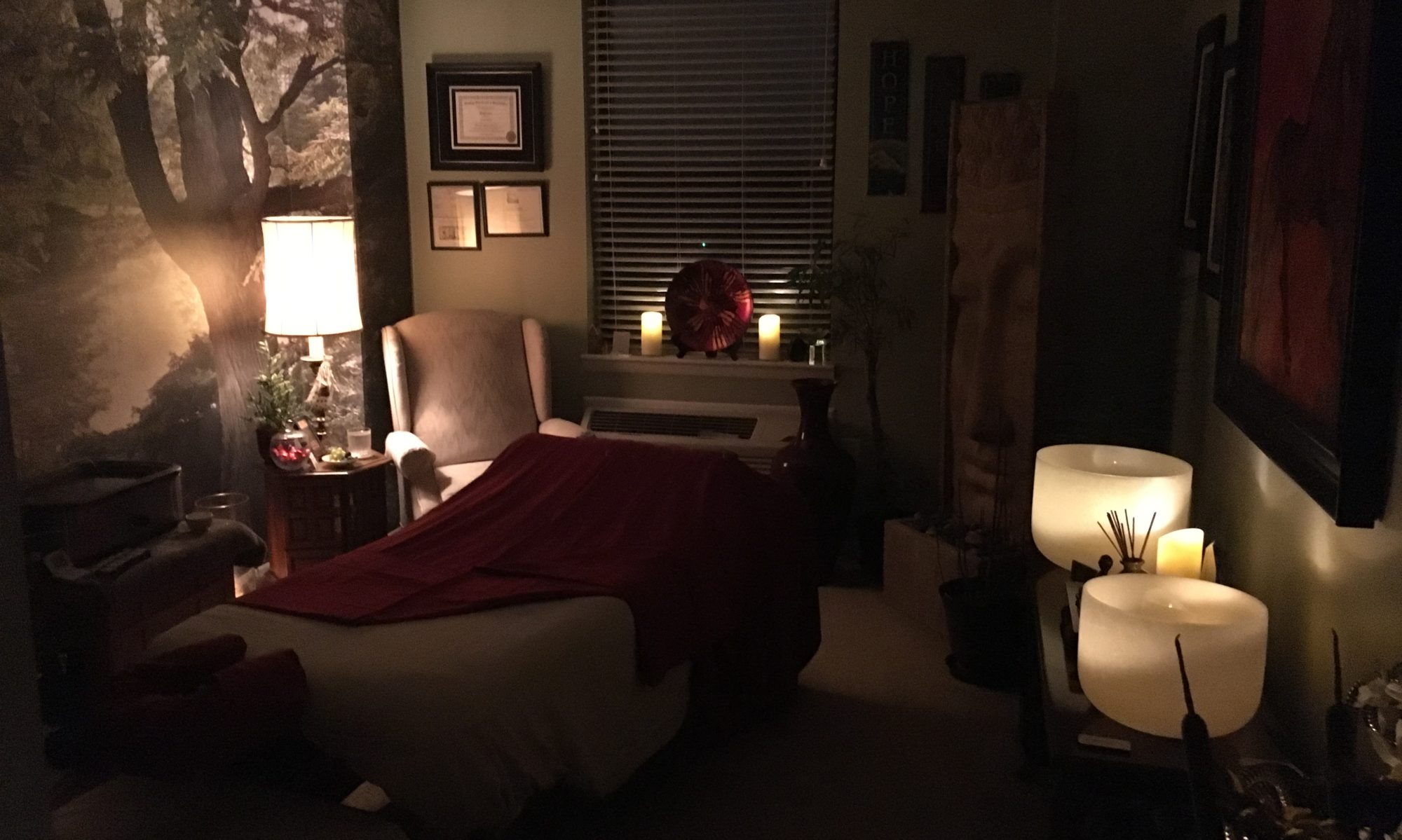
Massage therapy can be a powerful part of a body-maintenance plan. Swedish massage may support relaxation when stress is driving tension, while deep tissue massage, myofascial release, and trigger point therapy can be used thoughtfully for persistent areas of restriction. Thai yoga massage combines assisted stretching with rhythmic bodywork, and reflexology can offer focused care for tired feet after long days on the move.
The best session is not automatically the deepest one. More pressure is not always more therapeutic. A skilled practitioner should adjust to your comfort, goals, training schedule, health history, and how your body responds that day. At Life4orceTouch, individualized bodywork can combine modalities rather than forcing every client into the same routine – because your tight shoulders after a deadline may need something very different from your calves after a race!
Between appointments, build a small routine you can repeat. Move a little every day, vary your workstation or work positions, strength train within your tolerance, and make sleep a priority where possible. The routine does not need to be elaborate to matter. A body that receives regular care often has less reason to stay in full-time protection mode.
When Tightness Needs Medical Attention
Most everyday muscle tightness is not an emergency. Still, do not try to massage, stretch, or “work through” symptoms that feel alarming. Seek urgent medical care for tightness or pain with chest pressure, shortness of breath, fainting, sudden weakness, facial drooping, trouble speaking, or pain spreading into the arm or jaw.
You should also contact a qualified health professional for severe pain after an injury, significant swelling, redness or warmth in one limb, fever, numbness or tingling that persists, loss of coordination, unexplained muscle weakness, or dark urine after intense exertion. These signs can point to issues that need assessment beyond bodywork.
For ongoing tightness that keeps limiting your sleep, work, workouts, or ability to enjoy life, consider an integrated approach. Your physician, physical therapist, and massage therapist can each offer useful perspective. Massage is a supportive wellness service, not a replacement for medical diagnosis or treatment.
Your body is not failing you when it feels tight. It may be asking for recovery, variety, support, or a slower moment to reset. Listen early, move gently, and give yourself the kind of focused care that helps you feel at home in your body again.