That nagging pull in your low back during a long workday, a hip that feels tight on every run, or knees that complain during stairs may not begin where you feel it. Glute dysfunction massage therapy looks beyond the sore spot to address muscular tension and movement patterns that can leave your hips, pelvis, and lower body working harder than they should.
Your glutes are not just “workout muscles.” They help stabilize the pelvis, extend the hip, and support walking, lifting, climbing stairs, and changing direction. When they are not contributing well to movement, other areas often take over. The low back may grip. Hip flexors may stay chronically tight. Hamstrings can feel overworked. Even the knees and feet may carry more stress.
A personalized massage session cannot diagnose an injury or replace medical care when you need it. But skilled therapeutic bodywork can be a valuable part of a broader plan for reducing tension, restoring body awareness, and helping you move more comfortably. That is where individualized care makes all the difference!
What glute dysfunction can feel like
Glute dysfunction is a broad, non-diagnostic term often used when the gluteal muscles are weak, inhibited, poorly coordinated, or surrounded by enough tension that normal movement feels limited. It is not always about strength. A person can have strong glutes in the gym and still struggle to recruit them efficiently when walking, squatting, or standing for hours.
The sensation varies from person to person. You may notice a deep ache in one buttock, tightness around the outer hip, discomfort after sitting, or a low-back “catch” when rising from a chair. Some people feel the issue most during deadlifts, lunges, cycling, or running. Others feel it after a desk-bound day or a long commute across Philadelphia.
Common clues include:
- One-sided hip or buttock tightness that keeps returning
- Hamstrings or low-back muscles that feel like they are doing all the work
- Reduced comfort or control during squats, stairs, walking, or running
- A pelvis that feels uneven, stiff, or unstable during everyday movement
These signs do not automatically point to glute dysfunction. Sciatica, hip joint conditions, tendon problems, disc issues, and other concerns can create overlapping symptoms. Persistent, severe, spreading, or worsening pain deserves an evaluation from a qualified medical professional, especially if you have numbness, weakness, bowel or bladder changes, fever, unexplained weight loss, or pain after a significant fall or accident.
How glute dysfunction massage therapy can help
A thoughtful session starts with listening. When did the discomfort begin? Is it worse after sitting, training, sleeping, or standing? Does the pain travel? What types of movement feel restricted? These details help a massage therapist choose an approach that fits your body instead of delivering the same routine to every client.
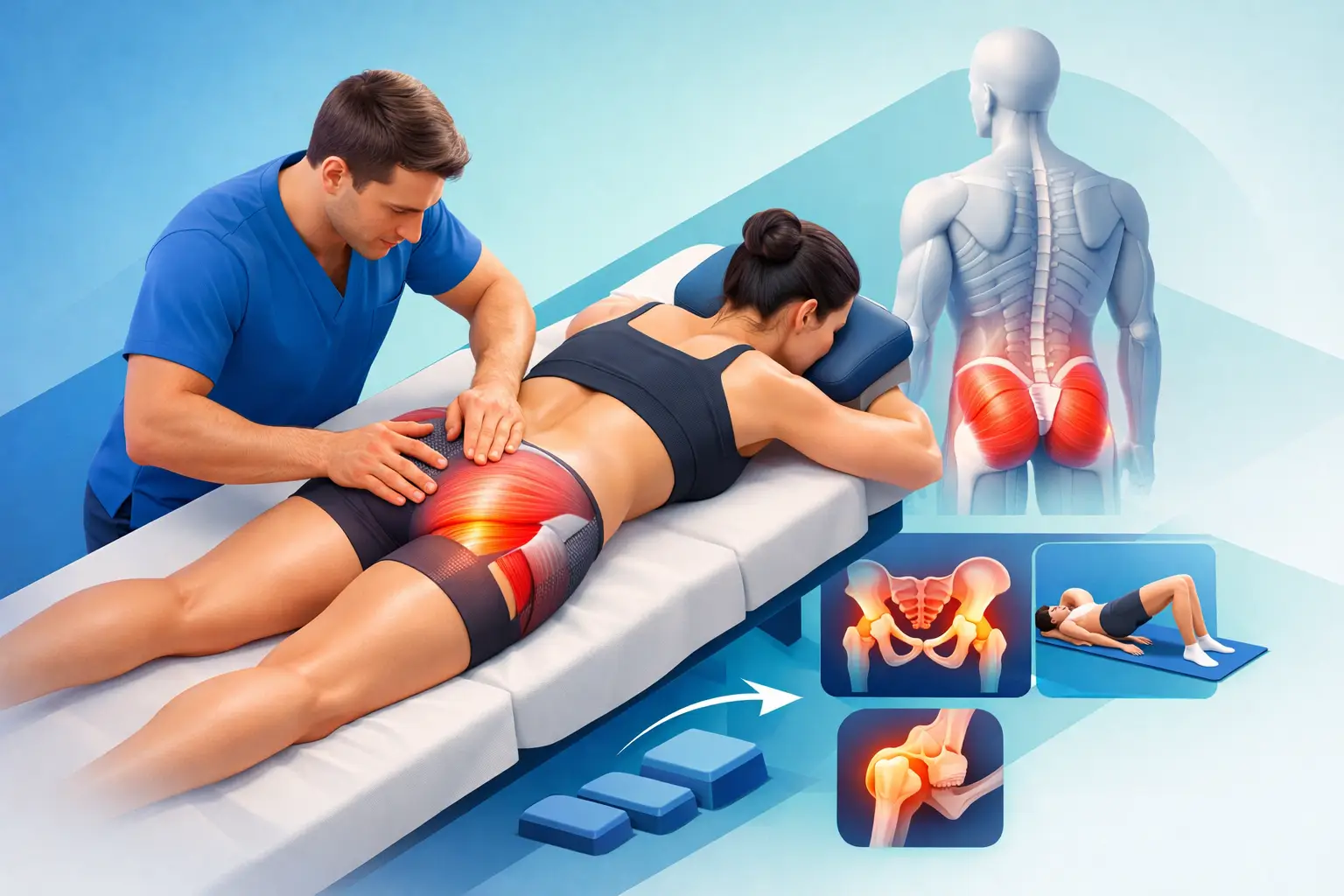
For many people, the goal is not to “break up” a muscle or force a painful release. It is to reduce excessive guarding, improve tissue glide, and create a calmer, more comfortable starting point for movement. That may involve focused work around the gluteus maximus, gluteus medius, deep lateral hip rotators, hamstrings, hip flexors, adductors, and lower back. The exact areas depend on your presentation.
Releasing tension around the hips and pelvis
Deep tissue massage, myofascial release, and targeted trigger point therapy may help address areas that feel dense, tender, or restricted. For example, an overactive piriformis or a tense gluteus medius can make the outer hip feel constantly switched on. Gentle, sustained work may help reduce that protective holding pattern.
Pressure should be purposeful, not punishing. More intensity is not always more effective. If your body braces against the work, holds its breath, or leaves the session feeling battered for days, the pressure may be too much. Therapeutic massage should be adapted to your comfort, health history, and recovery needs.
Supporting better movement awareness
Massage does not permanently “activate” a muscle or fix every movement pattern in one appointment. What it can do is reduce some of the noise – the tightness, tenderness, and protective tension that makes it difficult to sense how your hips are moving.
After bodywork, many clients find it easier to notice whether they are gripping through the low back, shifting into one hip, or locking their knees while standing. That awareness is useful. It gives you a better opportunity to practice simple, appropriate movement or strengthening work recommended by a fitness professional, physical therapist, or other qualified provider.
Helping recovery without sidelining your life
Active adults often push through tightness until it becomes impossible to ignore. Massage can be an effective recovery tool after demanding training blocks, long workweeks, travel, or repeated physical tasks. Swedish massage may be the right choice when stress and overall muscle fatigue are high. More focused myofascial or trigger point work may fit stubborn hip restrictions. Thai yoga massage can be especially helpful for clients who respond well to assisted stretching and mobility-focused bodywork.
The best modality depends on your sensitivity, goals, training load, and medical history. A runner with mild post-training tightness may need something very different from a client who has been sitting with chronic hip discomfort for months.
Why the glutes often stop doing their share
Sitting gets blamed for everything, but the full story is more complicated. Long periods of sitting can leave the hips in a flexed position and contribute to stiffness, especially when paired with little movement variety. But glute-related discomfort can also develop from sudden training increases, repetitive work demands, poor sleep, stress, old injuries, altered gait, or doing too much too soon after time away from exercise.
Stress matters more than many people realize. When life feels nonstop, the nervous system can keep muscles in a guarded state. That does not mean the pain is “all in your head.” It means your body’s stress response can influence tension, recovery, sleep quality, and how intensely you experience discomfort. Massage offers both targeted physical work and a chance to downshift. That combination can be powerful.
Make the benefits last between sessions
Massage works best as part of body maintenance, not as a one-time rescue mission. After a session, avoid immediately jumping into your hardest workout if the area has received focused work. Take a walk, hydrate normally, and pay attention to how your hips feel over the next day or two.
Small movement breaks can also change the pattern. If you sit for most of the day, stand up periodically and take a brief walk. If you train hard, build recovery into your week rather than waiting for pain to force a break. And if a clinician or trainer has given you exercises for hip stability or glute strength, use the improved comfort after massage as a window to practice them with control.
Consistency matters, but there is no universal schedule. Some clients benefit from a few closer sessions while working through a flare-up, then shift to maintenance care. Others may only need occasional support during high-stress periods, race training, or physically demanding seasons. Your response to treatment should guide the plan.
A more personalized approach to hip and glute care
At Life4orceTouch, massage is never treated as a generic spa service. Your session can combine relaxation-focused care with deeper therapeutic techniques based on what your body needs that day. Whether you are an athlete managing overworked hips, a professional who feels locked up after hours at a desk, or someone simply tired of carrying tension from the low back down, individualized bodywork can help you reconnect with easier movement.
You do not have to wait until discomfort becomes your normal. Give your hips a little more attention, choose care that respects your whole body, and let each session be a practical step toward moving through your day with more comfort and confidence!